
Our members are dedicated to improving road safety and sharing their knowledge with the wider community. Here, you can explore our members' good practices – initiatives that have been assessed for their effectiveness in addressing a road safety problem and have proven results.
Get inspired – and sign up to share your good practices too!
Thursday, February 13, 2025
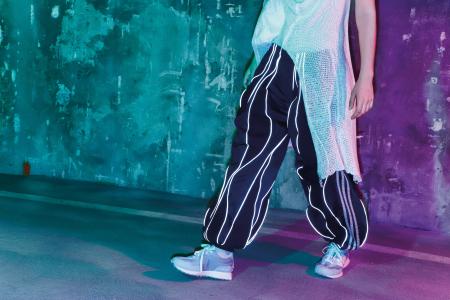
The event focuses on an initiative aimed at improving road safety for young people, especially e-scooter and e-bike users. A survey by Zavarovalnica Triglav showed that only a little over half of young people feel safe when riding an e-scooter, and many have already experienced accidents. The lack of protective clothing, helmets, and reflective accessories contributes to greater risks. In the "Ne bluzi, z glavo kruzi" (Don’t Play It Cool, Use Your Head) initiative, the Vozim Institute, Zavarovalnica Triglav, and Yootree Creative agency collaborated to encourage safer e-scooter use among young people. By working with design students, they created a unique collection, "Dejmo se videt" (Let's Be Seen), of reflective clothing that combines safety with modern style. The collection was presented on October 17, 2024, at Ljubljana Fashion Week.The students used innovative reflective materials to design fashionable yet safe products. The collection was presented at Ljubljana Fashion Week, where it gained significant attention. The goal was to raise awareness about the importance of visibility in traffic, especially during the autumn and winter months. The initiative continues with workshops and public events, aiming for the products to become part of young people’s everyday style. The main goal of the initiative is to reduce the risk of accidents and encourage young people to prioritize safety while maintaining their personal style.

Tuesday, December 10, 2024
Parents play a crucial role in deciding how their children go to school. Most of the time, they chose which mode of transport their children use and which route they take to reach the school gate. And although cycling to school seems like an obvious choice for many children, for their parents, it is not. Why? Because for parents, safety concerns are decisive and often trump all other considerations. Surveys in the Belgian city of Leuven, for example, show that especially women think traffic in their neighborhood is not safe enough to allow children to cycle to school independently.
That is not just a sad observation, but also one that deserves more scrutiny. Which situations do mothers deem unsafe? And, more importantly, why? What can be done about it, so more parents are comfortable with their children cycling to school?
That is not just a sad observation, but also one that deserves more scrutiny. Which situations do mothers deem unsafe? And, more importantly, why? What can be done about it, so more parents are comfortable with their children cycling to school?
Wednesday, July 3, 2024
Young pedestrians and cyclists are vulnerable in traffic. Crash figures show that children and young people are more likely to be victims of road crashes when they start to travel independently and/or switch to a new means of transport with which they have less experience. Among young pedestrians and cyclists in Flanders, the number of road casualties increases from the age group of 6 to 11 years. Specifically among young cyclists, this increase continues in the age group of 12 to 15 years.
In the past, traffic safety and mobility education in primary education in Flanders was often limited to theoretical lessons on knowledge of traffic rules and traffic signs, usually for the age group of 6 to 12 years. With our practice-oriented pedestrian and bicycle certificates, we want to provide practice-oriented traffic safety and mobility education from kindergarten onwards (2.5 years).
In the past, traffic safety and mobility education in primary education in Flanders was often limited to theoretical lessons on knowledge of traffic rules and traffic signs, usually for the age group of 6 to 12 years. With our practice-oriented pedestrian and bicycle certificates, we want to provide practice-oriented traffic safety and mobility education from kindergarten onwards (2.5 years).
Tuesday, June 25, 2024
We continually see in the media news of accidents involving cyclists.
During recent years, the use of bicycles has increased significantly and according to forecasts, this growth will continue in the coming years since many European policies are aimed at promoting the use of this vehicle as an alternative means of transport.
This increase in bicycle use is accompanied by an increase in accidents, which has caused great concern in society since this group is the only one in which the number of deaths has increased since 2010.
For this reason, SOSTRAFFIC BIKE was born as a safety element for cyclists, helping them, on the one hand, to inform other drivers of their position on the road, both visually through flashes of light and telematically via connectivity to the DGT 3.0 platform, and on the other hand, provide the contact with the best possible information for the location of the injured person and reduce the response time in locating them, which will increase the survival rate.
.
On the other hand, the maps used by SOSTRAFFIC include roads and mountain trails, so in the event of a fall, the entire route taken by the cyclist will be recorded from the start and will allow for quick geolocation. This is important since in the event of a fall in the mountains, this information can be key to accessing the injured person quickly.
The SOSTRAFFIC BIKE project It is an innovative product connected to the DGT 3.0 cloud.
This device has a light to visually warn drivers of the cyclist's presence, a camera with a microphone to record everything that happens during the journey, an App linked to the device and a connection to the DGT 3.0 cloud.
When the cyclist starts the route, it sends a message to these contacts with a link where they can check his position and the route taken at a given moment. At the end of the route they receive an end of route message.
During the route, it sends the cyclist's position in real time to the DGT 3.0 cloud so that navigators, cars or any other device connected to this cloud can receive the information and alert the driver of the presence of a cyclist on the route, even if he is in a curve or area not visible to the driver.
In the event of a fall, a countdown starts which, if not deactivated, sends a message to the contacts indicating the location of the accident and the route taken by the cyclist from the beginning of the route to the fall on a 3D map (this is important especially in falls on mountain trails) and a video with sound of what happened just before, during and after the fall.
The video will allow us to identify the reason for the accident, even use it as evidence in case the vehicle flees and the images of the accident will be recorded on the SOSTRAFFIC server
If the cyclist enters an area without telephone coverage and the time that passes is greater than the preset in the App, the device automatically sends a notice with the route taken, time without coverage and possible location of the cyclist.
During recent years, the use of bicycles has increased significantly and according to forecasts, this growth will continue in the coming years since many European policies are aimed at promoting the use of this vehicle as an alternative means of transport.
This increase in bicycle use is accompanied by an increase in accidents, which has caused great concern in society since this group is the only one in which the number of deaths has increased since 2010.
For this reason, SOSTRAFFIC BIKE was born as a safety element for cyclists, helping them, on the one hand, to inform other drivers of their position on the road, both visually through flashes of light and telematically via connectivity to the DGT 3.0 platform, and on the other hand, provide the contact with the best possible information for the location of the injured person and reduce the response time in locating them, which will increase the survival rate.
.
On the other hand, the maps used by SOSTRAFFIC include roads and mountain trails, so in the event of a fall, the entire route taken by the cyclist will be recorded from the start and will allow for quick geolocation. This is important since in the event of a fall in the mountains, this information can be key to accessing the injured person quickly.
The SOSTRAFFIC BIKE project It is an innovative product connected to the DGT 3.0 cloud.
This device has a light to visually warn drivers of the cyclist's presence, a camera with a microphone to record everything that happens during the journey, an App linked to the device and a connection to the DGT 3.0 cloud.
When the cyclist starts the route, it sends a message to these contacts with a link where they can check his position and the route taken at a given moment. At the end of the route they receive an end of route message.
During the route, it sends the cyclist's position in real time to the DGT 3.0 cloud so that navigators, cars or any other device connected to this cloud can receive the information and alert the driver of the presence of a cyclist on the route, even if he is in a curve or area not visible to the driver.
In the event of a fall, a countdown starts which, if not deactivated, sends a message to the contacts indicating the location of the accident and the route taken by the cyclist from the beginning of the route to the fall on a 3D map (this is important especially in falls on mountain trails) and a video with sound of what happened just before, during and after the fall.
The video will allow us to identify the reason for the accident, even use it as evidence in case the vehicle flees and the images of the accident will be recorded on the SOSTRAFFIC server
If the cyclist enters an area without telephone coverage and the time that passes is greater than the preset in the App, the device automatically sends a notice with the route taken, time without coverage and possible location of the cyclist.
Monday, June 24, 2024
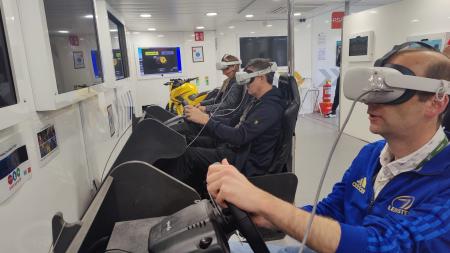
One of the problems faced by every road safety body is that the consequences of drink driving are abstract to people that have never felt them. It’s hard to imagine losing your licence, ending up in prison, killing someone, or being left with permanent disabilities because most of us have never experienced these things. We can logically understand them, but we don’t feel them. For the first time, using Virtual Reality, we could create a shocking and deeply resonant immersive experience and make these consequences feel real.
Data collected by the organisation showed that there had been a resurgence in drink driving in Ireland. A legacy of historical anti-drink driving advertising had reduced the behaviour, but a new cohort of younger people, who have never been exposed to it, were drinking and driving anew. These findings instigated creating a campaign to help reduce this worrying trend against younger adult males who considered themselves invincible and immune to road traffic collisions. For the first time, using Virtual Reality (VR), we could create a shocking and deeply resonant immersive experience and make these consequences feel real.
Our response was ‘Consequences’: a cut-through VR experience that toured the country and challenged the user by putting them in the shoes of a drunk driver, bringing this serious message home in a completely new and immersive way. Different storylines allowed the user to experience the full extent of the agonising consequences of drink driving—from injury to prosecution.
Data collected by the organisation showed that there had been a resurgence in drink driving in Ireland. A legacy of historical anti-drink driving advertising had reduced the behaviour, but a new cohort of younger people, who have never been exposed to it, were drinking and driving anew. These findings instigated creating a campaign to help reduce this worrying trend against younger adult males who considered themselves invincible and immune to road traffic collisions. For the first time, using Virtual Reality (VR), we could create a shocking and deeply resonant immersive experience and make these consequences feel real.
Our response was ‘Consequences’: a cut-through VR experience that toured the country and challenged the user by putting them in the shoes of a drunk driver, bringing this serious message home in a completely new and immersive way. Different storylines allowed the user to experience the full extent of the agonising consequences of drink driving—from injury to prosecution.