
Training

Monday, February 23, 2026
Romania has historically faced one of the lowest rates of child restraint system use in the European Union. In 2019, European data indicated that only around one quarter of child passengers were transported using appropriate child restraint systems. This reflected a broader road safety challenge: high child injury and fatality risks linked to improper restraint, misuse of car seats, and limited parental awareness.
The main challenges addressed by our initiative include:
• low usage rates of child restraint systems
• incorrect installation and misuse of car seats
• lack of parental awareness regarding age-appropriate restraint systems
• widespread misconceptions influenced by marketing, informal advice, and outdated practices
• limited access to evidence-based guidance and professional counselling
• insufficient integration of child passenger safety education into healthcare and community services
• socio-economic disparities affecting access to safety information and equipment
Additionally, parents often receive conflicting information and lack practical, hands-on guidance on proper installation and safe transportation practices.
These challenges contribute to preventable injuries and fatalities among child passengers and hinder progress toward EU road safety targets.
Our initiative addresses these systemic barriers through education, professional training, community outreach, and evidence-based awareness programs designed to improve correct usage and long-term behavioral change.
The main challenges addressed by our initiative include:
• low usage rates of child restraint systems
• incorrect installation and misuse of car seats
• lack of parental awareness regarding age-appropriate restraint systems
• widespread misconceptions influenced by marketing, informal advice, and outdated practices
• limited access to evidence-based guidance and professional counselling
• insufficient integration of child passenger safety education into healthcare and community services
• socio-economic disparities affecting access to safety information and equipment
Additionally, parents often receive conflicting information and lack practical, hands-on guidance on proper installation and safe transportation practices.
These challenges contribute to preventable injuries and fatalities among child passengers and hinder progress toward EU road safety targets.
Our initiative addresses these systemic barriers through education, professional training, community outreach, and evidence-based awareness programs designed to improve correct usage and long-term behavioral change.
European Mobility Week 2025
The European Mobility Week was held from September 16 to 22 under the motto “Mobility for Everyone”, aiming to raise awareness about the importance of sustainable urban mobility. Each year, the European Commission invites cities and local communities to promote use of sustainable modes of transport, while this year’s theme emphasises ensuring transport accessibility for people of all ages, abilities and needs.
The central event in Zagreb took place on September 22 in Zrinjevac Park, where the Croatian Automobile Club (HAK) also participated with the e-scooter simulator.
New preventive and educational program of the Croatian Automobile Club "Safe E-Scooter Riding"
In the Republic of Croatia, nearly 400 e-scooter accidents were recorded last year, causing two deaths. In the first seven months of 2025, there were already 365 accidents and over 100 serious injuries. Many involved minors, while accidents involving children using personal transport devices have also risen.
Monday, June 30, 2025
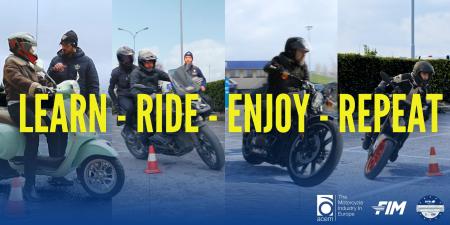
The human factor has repeatedly been shown to be the most critical factor in accidents involving riders. For this reason, lifelong training should be encouraged, reaching out to new and existing motorcyclists. High-quality training is instrumental in achieving the EU safety targets on the way to Vision Zero. To ensure that society fully benefits from all the advantages offered by motorcycles, more work is necessary to further improve the safety record of riders across Europe.

Friday, May 30, 2025
Our initiative addresses critical road safety challenges that are often overlooked in traditional driver education. Most driving schools focus on basic vehicle operation, but not on real-life risk anticipation, distraction management, or defensive mindset.
Key problems tackled by our VR Defensive Driving System include:
Driver distraction, especially due to smartphones and infotainment systems
Poor anticipation of traffic risks, particularly in urban and mixed traffic
Lack of situational awareness and understanding of the “big picture” around the vehicle
Insufficient consideration for other road users, including vulnerable groups
Specific risks related to pedestrians and cyclists, especially in city environments
Our project empowers drivers of all ages and experience levels to build mental habits that keep them and others safe – by learning to observe more, react earlier, and drive smarter.
Key problems tackled by our VR Defensive Driving System include:
Driver distraction, especially due to smartphones and infotainment systems
Poor anticipation of traffic risks, particularly in urban and mixed traffic
Lack of situational awareness and understanding of the “big picture” around the vehicle
Insufficient consideration for other road users, including vulnerable groups
Specific risks related to pedestrians and cyclists, especially in city environments
Our project empowers drivers of all ages and experience levels to build mental habits that keep them and others safe – by learning to observe more, react earlier, and drive smarter.

Friday, May 30, 2025
Cycling to work is sustainable, accessible, inclusive, low-cost, and healthy.
A mental shift – changing attitudes, perceptions, and habits – is essential before a modal shift can occur, because employees must first believe in the safety, practicality, and benefits of cycling before they are willing to change their daily transport choices.
We focus on the risks associated with cycling to work. Many employees lack the safety awareness and practical skills to navigate these challenges.
We identify three core road safety problems:
1. Distraction while cycling: using smartphones, GPS devices, or headphones significantly impairs attention and reaction time.
2. Inappropriate speed, particularly on electric bicycles: the higher speeds of e-bikes require better anticipation and control, yet many cyclists are unaware of the dangers this poses in mixed traffic.
3. Cycling under the influence: alcohol or drug use, even in small amounts, dramatically reduces a cyclist’s coordination and judgment.
These challenges are compounded by a lack of targeted, practical training for adult commuters. Our project uses immersive virtual reality simulations to allow employees to experience these risks in a controlled environment, raising awareness, changing perceptions, and promoting safer cycling behavior. The ultimate goal is achieving a mental and modal shift toward safer, more sustainable mobility choices.
A mental shift – changing attitudes, perceptions, and habits – is essential before a modal shift can occur, because employees must first believe in the safety, practicality, and benefits of cycling before they are willing to change their daily transport choices.
We focus on the risks associated with cycling to work. Many employees lack the safety awareness and practical skills to navigate these challenges.
We identify three core road safety problems:
1. Distraction while cycling: using smartphones, GPS devices, or headphones significantly impairs attention and reaction time.
2. Inappropriate speed, particularly on electric bicycles: the higher speeds of e-bikes require better anticipation and control, yet many cyclists are unaware of the dangers this poses in mixed traffic.
3. Cycling under the influence: alcohol or drug use, even in small amounts, dramatically reduces a cyclist’s coordination and judgment.
These challenges are compounded by a lack of targeted, practical training for adult commuters. Our project uses immersive virtual reality simulations to allow employees to experience these risks in a controlled environment, raising awareness, changing perceptions, and promoting safer cycling behavior. The ultimate goal is achieving a mental and modal shift toward safer, more sustainable mobility choices.

Thursday, May 29, 2025
Training local authorities, safety auditors, and consultants to understand and implement Safe System principles on Irish road projects. The Safe System approach, which aims to eliminate death and serious injury on roads, requires a fundamental shift in thinking—from blaming individual road users to designing a transport system that anticipates human error and minimizes its consequences. Many professionals involved in road planning and safety in Ireland may not yet be fully familiar with this paradigm or how to apply it effectively in practice. This creates a gap between policy aspirations and on-the-ground implementation. Training must therefore go beyond theoretical understanding; it must equip stakeholders with practical tools, case studies, and methodologies tailored to the Irish context. Additionally, integrating Safe System thinking into all stages of road project development—from planning and design to construction and maintenance—requires cross-sector collaboration and a shared commitment to safety. Overcoming institutional inertia, aligning with existing regulations, and ensuring consistent application across local authorities are further hurdles. Addressing these challenges through targeted education, continuous professional development, and supportive policy frameworks is essential to embedding Safe System principles into Ireland’s road safety culture and achieving long-term reductions in road trauma.
Wednesday, May 28, 2025
Occupational Road Risk, also known as Work Related Road Risk (WRRR), is the risk that an employee may be involved in a collision while driving for work, causing harm to themselves and others. As a minimum, 1/3 of injury collisions every year in the UK involves at least one person driving for work, with 35,000 casualties because of these collisions annually.
Employers have an established legal role to play in the safe management of their employees who drive/ride for work under the UK Health and Safety at Work Act. Workplace health and safety legislation applies equally to work related driving and riding and should be applied in the same way as in the physical workplace.
The Driving for Better Business programme (DfBB) works on the premise that employers have a crucial role to play in the safety of drivers and other road users. Working with employers, we can positively influence a significant number of road users to improve driver behaviour and reduce collisions and injuries. Whilst there is a focus on the requirement under law to manage driving for work, the principle is valid in any jurisdiction.
Our vision is “a world where those who use the roads for work do so safely, efficiently and sustainably" and mission is “To improve safety and reduce risk for all those who drive or ride for work, by promoting good management practice and demonstrating the significant business benefits”.
Employers have an established legal role to play in the safe management of their employees who drive/ride for work under the UK Health and Safety at Work Act. Workplace health and safety legislation applies equally to work related driving and riding and should be applied in the same way as in the physical workplace.
The Driving for Better Business programme (DfBB) works on the premise that employers have a crucial role to play in the safety of drivers and other road users. Working with employers, we can positively influence a significant number of road users to improve driver behaviour and reduce collisions and injuries. Whilst there is a focus on the requirement under law to manage driving for work, the principle is valid in any jurisdiction.
Our vision is “a world where those who use the roads for work do so safely, efficiently and sustainably" and mission is “To improve safety and reduce risk for all those who drive or ride for work, by promoting good management practice and demonstrating the significant business benefits”.

Wednesday, May 28, 2025
The stagnation of accident and mortality figures in Spain, particularly regarding run-off-road incidents, demonstrates that traditional road safety solutions, while still essential, have reached their maximum possible impact. Road network authorities must therefore immediately commit to new, disruptive, and innovative measures. An urgent response is required to make the European goal of Zero Victims by 2050 achievable, and this response must be supported by solutions that harness the potential of technology and artificial intelligence.
The main pain points are as follows:
1. High accident rate: Worrying levels of accidents, run-off-road incidents, and pedestrian collisions persist, resulting in severe human and economic consequences.
2. Reactive rather than preventive safety: Existing systems intervene only after an incident to minimise its consequences. There are very few real-time risk detection and alert mechanisms in place.
3. Lack of connected response: There are no infrastructure-based solutions capable of automatically detecting incidents or run-off-road events unless incorporated by the vehicle itself, which often leads to critical delays in notifying emergency services or alerting other road users.
4. Limited technological adaptability: Many roads lack basic supplies such as electricity or signal coverage for remote management.
5. Level of investment: While national authorities are progressively beginning to invest in advanced technological solutions, budgets remain limited, often restricted to pilot programmes and trials without genuine commitment. In numerous regional and local administrations, no officials have yet been appointed for road modernisation or digital transformation, and no budgets are allocated for these matters.
6. Digital technological expertise among road administrators: There is a clear shortage of technical profiles with expertise in IT or telecommunications, and public administrations are slow in equipping themselves with such profiles.
7. The challenge of intelligent infrastructure and the connected vehicle: There is an urgent need to seek alternatives to large-scale V2X (vehicle-to-everything) communication protocols between vehicles or between vehicles and infrastructure, as these may not prove effective in the short term due to factors such as public investment levels, the gradual renewal of the vehicle fleet, or the complexity of harmonising protocols across manufacturers and countries. Tactical solutions that demonstrate real, immediate impact are critically needed.
These are the principal pain points slowing the advancement of smart road deployment, understood as an entire ecosystem of connected, proactive, and preventive solutions to ensure safe, sustainable, and intelligent mobility.
The main pain points are as follows:
1. High accident rate: Worrying levels of accidents, run-off-road incidents, and pedestrian collisions persist, resulting in severe human and economic consequences.
2. Reactive rather than preventive safety: Existing systems intervene only after an incident to minimise its consequences. There are very few real-time risk detection and alert mechanisms in place.
3. Lack of connected response: There are no infrastructure-based solutions capable of automatically detecting incidents or run-off-road events unless incorporated by the vehicle itself, which often leads to critical delays in notifying emergency services or alerting other road users.
4. Limited technological adaptability: Many roads lack basic supplies such as electricity or signal coverage for remote management.
5. Level of investment: While national authorities are progressively beginning to invest in advanced technological solutions, budgets remain limited, often restricted to pilot programmes and trials without genuine commitment. In numerous regional and local administrations, no officials have yet been appointed for road modernisation or digital transformation, and no budgets are allocated for these matters.
6. Digital technological expertise among road administrators: There is a clear shortage of technical profiles with expertise in IT or telecommunications, and public administrations are slow in equipping themselves with such profiles.
7. The challenge of intelligent infrastructure and the connected vehicle: There is an urgent need to seek alternatives to large-scale V2X (vehicle-to-everything) communication protocols between vehicles or between vehicles and infrastructure, as these may not prove effective in the short term due to factors such as public investment levels, the gradual renewal of the vehicle fleet, or the complexity of harmonising protocols across manufacturers and countries. Tactical solutions that demonstrate real, immediate impact are critically needed.
These are the principal pain points slowing the advancement of smart road deployment, understood as an entire ecosystem of connected, proactive, and preventive solutions to ensure safe, sustainable, and intelligent mobility.