
Training

Wednesday, June 19, 2024
Between 2018 and 2022 there where 93 fatalities and 894 serious injury collisions in Irish roads which involved motorcyclists. No specific road safety programme aimed at motorcyclists existed at that time. It was identified that the vast majority of these collisions occurred over the Summer months and almost 50% at weekends and many involved leisure riders or those retuning to motorcycling. Ireland has a large number of rural roads, ideal for leisure riding but this also increases risk through road topography and additional hazards which adversely impact motorcycle safety compared to other road users.
Wednesday, June 19, 2024
Asociatia Drum Sigur analyzed and researched the following design errors:
- incorrect use of signs for yielding priority in intersections (Give Way and Stop signs) (error found in most countries of the world)
- the formulas used to calculate the length of acceleration/deceleration lanes at road junctions are incorrect (they do not take into account the impact of heavy vehicle traffic, as well as the volume of traffic flows) (error found worldwide)
- the use of staggered pedestrian crossings at traffic lighted intersections has negative effects on pedestrian traffic in most cases. (case analysis for all the staggered pedestrian crossings in Bucharest)
- identification of design and execution errors for T-type intersections, roundabouts, turbo-roundabouts or interchanges in some cities in Romania.
- analyzing some design errors on certain streets in Bucharest and proposing measures to improve road safety and traffic flow.
- incorrect use of signs for yielding priority in intersections (Give Way and Stop signs) (error found in most countries of the world)
- the formulas used to calculate the length of acceleration/deceleration lanes at road junctions are incorrect (they do not take into account the impact of heavy vehicle traffic, as well as the volume of traffic flows) (error found worldwide)
- the use of staggered pedestrian crossings at traffic lighted intersections has negative effects on pedestrian traffic in most cases. (case analysis for all the staggered pedestrian crossings in Bucharest)
- identification of design and execution errors for T-type intersections, roundabouts, turbo-roundabouts or interchanges in some cities in Romania.
- analyzing some design errors on certain streets in Bucharest and proposing measures to improve road safety and traffic flow.
Monday, June 17, 2024
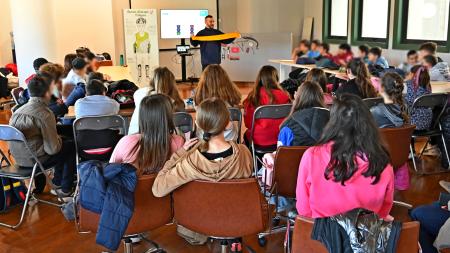
The main challenge is the reduction of road accidents as a function of driving behavior. In recent years, significant progress has been made and the rate of accidents has decreased, but further improvement is needed in drivers behavior and at the same time in the infrastructure which is already extremely improved. For this reason, we created the safe cycling training program to train future drivers: the children, in order to become responsible drivers in the future
Monday, June 17, 2024
As the statistics show, Greece has the highest ratio of motorcyclists per active population. The training for riding in public roads offered is not sufficient and the driving license examinations do not guarantee the adequacy of knowledge, skills and road behavior as shown by the number of accidents. A post-education process is lacking in millions of amateur A license riders and this becomes more urgent as the need for further training for those who use motorcycles as a work vehicle (delivery drivers) has arisen. Government agencies have special refresher courses for their employees but millions of motorcyclists ride without any additional training beyond the basic training they attended before obtaining their driving license.
Sunday, June 16, 2024
The key objective is to improve the safety of learner drivers and provide a safe driving environment in which learners can practice safe driving skills. In primary research undertaken in 2018, 31% of Advanced Driving Instructors (ADIs) surveyed agreed that the Essential Driver Training programme (EDT) in Ireland did not provide a safe driving environment for learner drivers. Although it is illegal, driving unaccompanied is regularly done by a large percentage of learner drivers. As part of Phase 1 of the Road Safety Strategy (RSS) 2021-2024 a goal has been set to eliminate unaccompanied driving in Ireland by Q4 2024. The Behaviours and Attitudes Survey (2019) found 39% of learner drivers drive unaccompanied. In 2022, 5,929 learner drivers received penalty points for driving unaccompanied.
Ireland has a population of 5.5 million people, on average per year we have 11 fatalities and 45 serious injuries from road collisions with drivers pre-test (2007-2021 data). 80% of fatal collisions involved learner drivers who were driving unsupervised, while 75% of serious injury collisions involved unsupervised learner drivers. We know from research undertaken that collisions involving learner drivers reduce by 80% whilst accompanied. No one should die while learning to drive.
Ireland has a population of 5.5 million people, on average per year we have 11 fatalities and 45 serious injuries from road collisions with drivers pre-test (2007-2021 data). 80% of fatal collisions involved learner drivers who were driving unsupervised, while 75% of serious injury collisions involved unsupervised learner drivers. We know from research undertaken that collisions involving learner drivers reduce by 80% whilst accompanied. No one should die while learning to drive.
Sunday, June 16, 2024
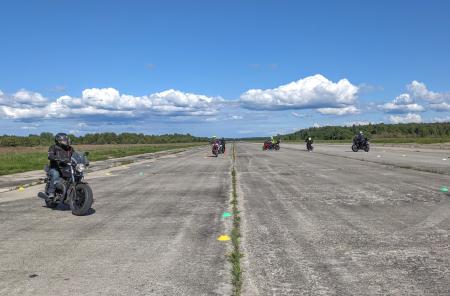
Motorcycle drivers are often involved in accidents or the outcome is worsened because of lack of skills. Our goal is to improve the skills and techniques of everyday motorcycle riders to better handle emergency situations and/or prevent driving off the road. The amount of driving lessons in driving schools is not sufficient and the quality varies. Also, there are plenty of riders who got their license a long time ago where the training was non-existent. Fortunately the situation is getting better but is still far from perfect.
Sunday, June 16, 2024
From the first of September 2022, MKIF Magyar Koncessziós Infrastruktursa Fejlsztó Zrt took over the operation, maintenance and development of 1,237 km of existing Hungarian expressways.
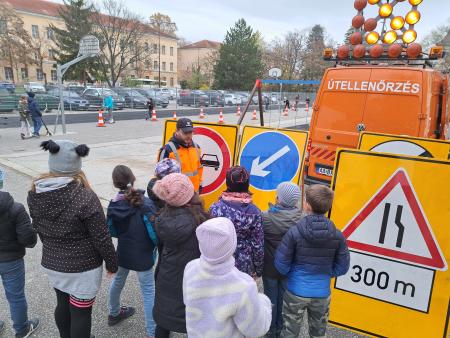
When analyzing the accidents recorded by our traffic surveillance cameras on domestic expressways, we noticed that it is important to draw attention to traffic safety in our communication (keeping a following distance, observing the speed limit near work areas, protecting our colleagues, early education of children/young adults in safe traffic) and traffic -culture (littering, driving in an egoistic style that endangers others, early education of children/young adults on responsible driving).
When analyzing the accidents recorded by our traffic surveillance cameras on domestic expressways, we noticed that it is important to draw attention to traffic safety in our communication (keeping a following distance, observing the speed limit near work areas, protecting our colleagues, early education of children/young adults in safe traffic) and traffic -culture (littering, driving in an egoistic style that endangers others, early education of children/young adults on responsible driving).
Saturday, June 15, 2024
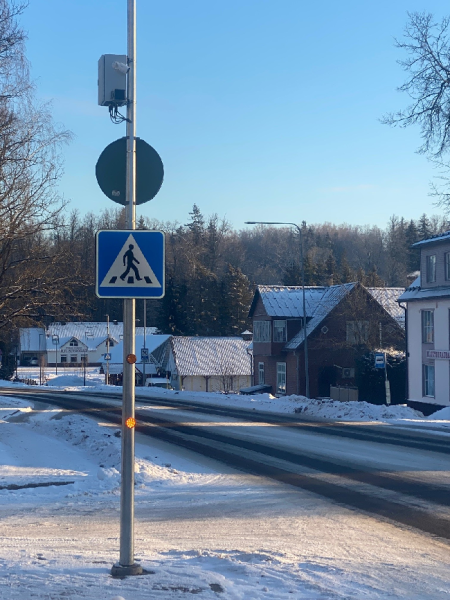
The main road safety challenge that was tackled in this initiative is safety of the pedestrians and drivers on the main street of Põlva. The daily traffic volume on this road segment is high, with approximately 5000 vehicles, including trucks, passing through it every day. Simultaneously, high number of pedestrians use the same road daily to get to work or school. From a traffic safety perspective, this road segment is challenging – the hilly and winding road can distract drivers from speed limits, and the increased prevalence of light vehicles (bicycles, scooters etc) further amplifies the danger of this situation.
Smart Road is a vision of the future street, where all road users are equally preferred, and the emphasis is no longer solely on cars. Smart Road is designed to encourage drivers to objectively consider their traffic behaviour and to pay more attention to vulnerable road users. At the same time, the creators of Smart Road understand that vulnerable road users are indeed more difficult to notice, and effective solutions must be provided to assist drivers in focusing their attention on them.
Smart Road is a vision of the future street, where all road users are equally preferred, and the emphasis is no longer solely on cars. Smart Road is designed to encourage drivers to objectively consider their traffic behaviour and to pay more attention to vulnerable road users. At the same time, the creators of Smart Road understand that vulnerable road users are indeed more difficult to notice, and effective solutions must be provided to assist drivers in focusing their attention on them.
Friday, June 14, 2024
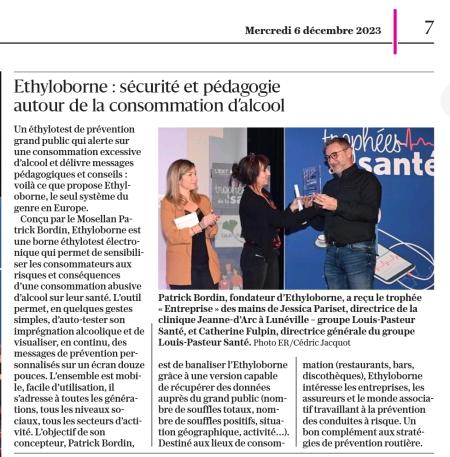
Participer aux engagements de l’U.E. pour la réduction du nombre de victimes de moitié d’ici 2030 sur les routes d’Europe.
L’alcool au volant toujours très présent :
• En milieu festif
• En entreprise
La recrudescence de la consommation de protoxyde d’azote :
• La sensibilisation sur les dangers des mésusages (effets sur la mobilité).
• Détection du N2O en exclusivité (Forces de l’ordre)
L’alcool au volant toujours très présent :
• En milieu festif
• En entreprise
La recrudescence de la consommation de protoxyde d’azote :
• La sensibilisation sur les dangers des mésusages (effets sur la mobilité).
• Détection du N2O en exclusivité (Forces de l’ordre)
Friday, June 14, 2024
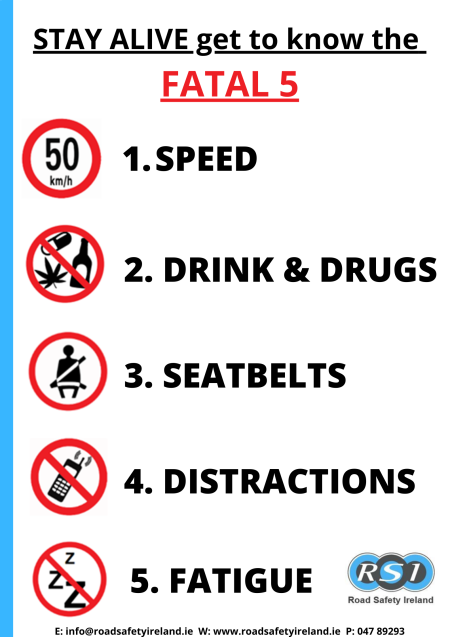
We are focusing on the most common causation factors of accidents/collsions on roads.