
Training
Friday, May 9, 2025
By 2050, the percentage of people over 50 in the European Union will be almost 50% of the total population. According to UN estimates, the average life expectancy will increase from the current 68 to 76 years, and in highly developed countries from 77 to 83 years. This group of road users will therefore grow, which consequently means that the statistical probability of crashes involving a senior will also increase.
According to data from the Motor Transport Institute in Poland, the main problems of Seniors leading to a crash are related to:
• undivided attention,
• incorrect perception of road situations,
• narrowing of the field of vision, poor contrast sensitivity and distance assessment,
• extended time of performing maneuvers, reaction time, eye-hand coordination.
The main causes of road crashes in Poland are:
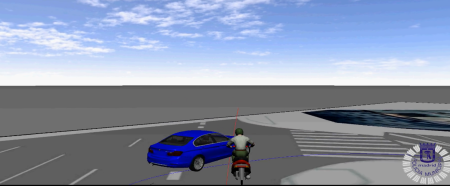
• among Seniors driving cars - failure to give way at an intersection,
• among Seniors cycling - uncontrolled entry into a part of the roadway not designated for cyclists (pedestrian crossing),
• among Seniors walking - entering the roadway directly in front of an oncoming vehicle (often from behind an obstacle).
The social costs of all road incidents in Poland in 2022 amounted to PLN 52 billion, including the costs of road crashes PLN 37.9 billion and the costs of road collisions PLN 14.1 billion. In 2021, these costs were lower. The share of seniors in the cost statistics accounted for 9% of all road crashes and amounted to PLN 3.4 billion. The lower cost in the case of seniors results from the adopted assumptions regarding productivity and projected life expectancy. However, it should be borne in mind that society is "aging" and the number of seniors will increase. The life expectancy of seniors will also increase. These factors will undoubtedly affect changes in the proportions of the annual costs of road crashes in Poland.
According to data from the Motor Transport Institute in Poland, the main problems of Seniors leading to a crash are related to:
• undivided attention,
• incorrect perception of road situations,
• narrowing of the field of vision, poor contrast sensitivity and distance assessment,
• extended time of performing maneuvers, reaction time, eye-hand coordination.
The main causes of road crashes in Poland are:
• among Seniors driving cars - failure to give way at an intersection,
• among Seniors cycling - uncontrolled entry into a part of the roadway not designated for cyclists (pedestrian crossing),
• among Seniors walking - entering the roadway directly in front of an oncoming vehicle (often from behind an obstacle).
The social costs of all road incidents in Poland in 2022 amounted to PLN 52 billion, including the costs of road crashes PLN 37.9 billion and the costs of road collisions PLN 14.1 billion. In 2021, these costs were lower. The share of seniors in the cost statistics accounted for 9% of all road crashes and amounted to PLN 3.4 billion. The lower cost in the case of seniors results from the adopted assumptions regarding productivity and projected life expectancy. However, it should be borne in mind that society is "aging" and the number of seniors will increase. The life expectancy of seniors will also increase. These factors will undoubtedly affect changes in the proportions of the annual costs of road crashes in Poland.
Friday, May 9, 2025
In the Maritime Neighbourhoud of Molenbeek, we identified multiple road safety barriers that disproportionately affect children and women. Many vulnerable residents, especially children, do not have access to a bike or a safe space to ride, making it difficult to learn and practice cycling. Public space is often dominated by car traffic, and children are rarely given the opportunity to move independently and safely. Additionally, many women never learned to ride a bicycle or have lost confidence due to long-term disuse and fears around traffic. A lack of infrastructure, awareness, and cycling culture further limits active mobility. Through Openstreets, we tackled these challenges by creating car-free zones, offering safe spaces for learning, practicing, and enjoying cycling. We provided access to bikes, organized lessons for women and children, and ensured on-site bike repair services. This comprehensive approach helped remove practical, cultural, and emotional barriers to cycling. In doing so, we promoted cycling as a safe, accessible, and empowering mode of transport and helped shift perceptions of who “belongs” on the road.
Friday, May 9, 2025
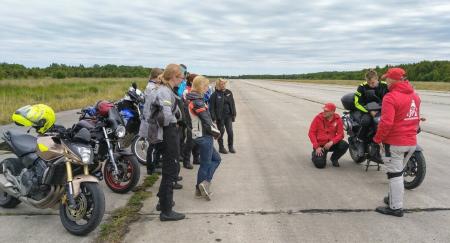
We focus on several key road safety problems related to motorcyclists:
Insufficient real-world riding skills. Many motorcyclists lack the practical skills needed to respond effectively to unexpected or dangerous traffic situations, such as emergency braking, low-speed maneuvering, and obstacle avoidance. These skills are rarely practiced outside of license training.
Overconfidence among riders. Especially for novice or seasonal riders, there is often a dangerous gap between perceived and actual riding ability. This overconfidence can lead to risky decisions on the road.
Lack of safe environments to practice. In Lithuania, there are very few opportunities for riders to improve their control skills in a structured, non-competitive, and safe setting. Without such environments, many riders turn to public roads or unsafe spaces to "practice."
Social pressure and risky riding behavior. Young riders in particular may feel social pressure to show off riding skills or speed on public roads, increasing the risk for themselves and other road users.
Through our activities, motogym.lt provides a safe, engaging space to improve skills, build self-awareness, and promote a safety-first riding culture.
Insufficient real-world riding skills. Many motorcyclists lack the practical skills needed to respond effectively to unexpected or dangerous traffic situations, such as emergency braking, low-speed maneuvering, and obstacle avoidance. These skills are rarely practiced outside of license training.
Overconfidence among riders. Especially for novice or seasonal riders, there is often a dangerous gap between perceived and actual riding ability. This overconfidence can lead to risky decisions on the road.
Lack of safe environments to practice. In Lithuania, there are very few opportunities for riders to improve their control skills in a structured, non-competitive, and safe setting. Without such environments, many riders turn to public roads or unsafe spaces to "practice."
Social pressure and risky riding behavior. Young riders in particular may feel social pressure to show off riding skills or speed on public roads, increasing the risk for themselves and other road users.
Through our activities, motogym.lt provides a safe, engaging space to improve skills, build self-awareness, and promote a safety-first riding culture.
Tuesday, May 6, 2025
While road safety efforts often focus on prevention and driver behavior, a critical yet under-recognized issue is the post-accident condition of roadways. Hazardous residues such as oil, fuel, and vehicle debris left after a traffic incident significantly increase the risk of secondary accidents, especially in urban environments with high traffic flow or during adverse weather conditions.
It is estimated that up to 7% of road accidents are directly caused by solid or liquid waste remaining on the roadway following previous incidents. Despite this, post-accident cleaning is frequently inconsistent, delayed, or not conducted in accordance with environmental regulations.
Our initiative addresses this gap by offering a nationwide, 24/7 emergency intervention service focused on restoring road safety and environmental conditions after accidents. Activated by Civil Protection or law enforcement, our patented equipment and trained teams clean, decontaminate, and report damage with full traceability. We also georeference each intervention, helping municipalities identify accident hotspots and improve their prevention strategies.
By acting immediately after incidents, we not only reduce accident recurrence but also promote environmental compliance, public safety, and operational efficiency. Our service transforms a reactive task into a strategic road safety solution.
It is estimated that up to 7% of road accidents are directly caused by solid or liquid waste remaining on the roadway following previous incidents. Despite this, post-accident cleaning is frequently inconsistent, delayed, or not conducted in accordance with environmental regulations.
Our initiative addresses this gap by offering a nationwide, 24/7 emergency intervention service focused on restoring road safety and environmental conditions after accidents. Activated by Civil Protection or law enforcement, our patented equipment and trained teams clean, decontaminate, and report damage with full traceability. We also georeference each intervention, helping municipalities identify accident hotspots and improve their prevention strategies.
By acting immediately after incidents, we not only reduce accident recurrence but also promote environmental compliance, public safety, and operational efficiency. Our service transforms a reactive task into a strategic road safety solution.
Wednesday, April 30, 2025
As an insurance company we know that the safer our roads are, the fewer accidents we will have. We also know that children are the best audience in order to ensure that bad road usage habits will change in the years to come.
Road safety is a major issue in the EU, taking into consideration Vision Zero and all the proposals towards reducing fatalities and serious injuries. At the same time, the crosswalks outside schools all around Greece are faded or even invisible. While we talk to the children about safety, we have no means to safeguard their most regular trip, to and from their school, and lack the practical prompt to show them how they can walk safely in the urban environment.
At Hella Direct we care, beyond insurance, about safety, and acknowledge that both infrastructure and road safety education do not rise up to current needs and expectations, we decided to act.
Thus we launched the Safe Roads project. With our expert crew, we go wherever we are needed all around Greece. Always in cooperation with the municipalities and schools, we paint faded crossings. That's how we're changing insurance for good.
Road safety is a major issue in the EU, taking into consideration Vision Zero and all the proposals towards reducing fatalities and serious injuries. At the same time, the crosswalks outside schools all around Greece are faded or even invisible. While we talk to the children about safety, we have no means to safeguard their most regular trip, to and from their school, and lack the practical prompt to show them how they can walk safely in the urban environment.
At Hella Direct we care, beyond insurance, about safety, and acknowledge that both infrastructure and road safety education do not rise up to current needs and expectations, we decided to act.
Thus we launched the Safe Roads project. With our expert crew, we go wherever we are needed all around Greece. Always in cooperation with the municipalities and schools, we paint faded crossings. That's how we're changing insurance for good.
Friday, April 25, 2025
Children perceive the world and thus also the street space differently. This fact implements a higher risk for children to get injured in different traffic situations. It is therefore important to start age-appropriate road safety education as early as possible.
Wednesday, April 16, 2025
Una delle sfide principali riguarda una cultura radicata che privilegia l'uso dell'automobile, scoraggiando l'adozione di mezzi pubblici e di trasporti alternativi. Questo comportamento si riflette in un mancato rispetto delle normative del codice della strada. Inoltre, c'è una scarsa attenzione verso la protezione degli utenti più vulnerabili, come pedoni e ciclisti. Questo atteggiamento compromette la vivibilità della città, che viene vissuta più come un luogo di transito che come uno spazio di incontro e socializzazione.
Thursday, April 10, 2025
Road safety in Europe and worldwide is still tragically compromised by a high number of accidents and avoidable loss of human lives.
This is compounded by the worrying frequency of vehicle recalls for brake problems, with over 3 million units affected in just two years (ANSA data), a symptom of an intrinsic vulnerability in current systems.
The dependence on rare materials in traditional braking systems and new technologies not only creates economic instability but also generates significant geopolitical implications.
Furthermore, there remains a lack of a reliable and universal mechanical solution capable of improving braking and ensuring safety in the event of failure.
These challenges highlight the urgent need for innovative solutions like DUOBBRAK, capable of overcoming the limitations of current systems, despite the resistance, and mostly the indifference, encountered in promoting it within the industry, accelerators, and public and private institutions
This is compounded by the worrying frequency of vehicle recalls for brake problems, with over 3 million units affected in just two years (ANSA data), a symptom of an intrinsic vulnerability in current systems.
The dependence on rare materials in traditional braking systems and new technologies not only creates economic instability but also generates significant geopolitical implications.
Furthermore, there remains a lack of a reliable and universal mechanical solution capable of improving braking and ensuring safety in the event of failure.
These challenges highlight the urgent need for innovative solutions like DUOBBRAK, capable of overcoming the limitations of current systems, despite the resistance, and mostly the indifference, encountered in promoting it within the industry, accelerators, and public and private institutions
Wednesday, April 2, 2025
According to statistics, road accidents are the leading cause of death for young people, especially in the 18-24 age group. This is a good reason to raise awareness and to leverage the young population.
Very young people and young adults represent an interesting target for awareness campaigns. Not only are they able to spread awareness in society right now, but they are also highly exposed to road risks. Moreover, when properly addressed, younger people are open to learn and to change behaviour.
Motorways, Italian Police and City Authorities decided to reach out to young people by devising a project aimed at road safety culture.
The main goal is to widespread safety culture directly to students and young adults. It is also the opportunity to mobilize on road safety a huge number of national, regional and local stakeholders.
Impact and scale 1: The core of the initiative are 40 events in 6 regions and 20 towns. Organizers expect to raise awareness to 10.000 to 20.000 people, ideally 15.000. It’s not an easy tour of lectures in schools. Not only events: strategies for medium/long term engagement are put into practice. A concrete assessment of results is being made.
Very young people and young adults represent an interesting target for awareness campaigns. Not only are they able to spread awareness in society right now, but they are also highly exposed to road risks. Moreover, when properly addressed, younger people are open to learn and to change behaviour.
Motorways, Italian Police and City Authorities decided to reach out to young people by devising a project aimed at road safety culture.
The main goal is to widespread safety culture directly to students and young adults. It is also the opportunity to mobilize on road safety a huge number of national, regional and local stakeholders.
Impact and scale 1: The core of the initiative are 40 events in 6 regions and 20 towns. Organizers expect to raise awareness to 10.000 to 20.000 people, ideally 15.000. It’s not an easy tour of lectures in schools. Not only events: strategies for medium/long term engagement are put into practice. A concrete assessment of results is being made.
Wednesday, March 19, 2025
The overall target of the KFV podcast is to provide important and usefull tips for people who care about their personal safety and the well-being of their loved ones in the everyday life.
In each episode of the KFV podcast, two KFV experts talk for around 20 minutes about a topic from everyday life: about current issues of safe road traffic as well as accident-free relaxation during sport and exercise in nature, but also about the pitfalls of getting older as well as the turbulent life with children and teenagers.
With life experience, specialist knowledge and a good dose of humour, both moderators provide important tips and back ground information about accident risks, accident occurrence and accident prevention.
Here is a little taster of the content of the first three episodes published in March 2023, April 2023 and May 2023:
Episode 1: ‘L17: the best route to a driving licence?’
L17 is currently the most comprehensive driver training course on the way to a B driving licence. But driving the first 3,000 kilometres with your own child at the wheel can be nerve-wracking. Is the effort, courage and extra work really worth it?
On air: Monday, 11 March 2023
Episode 2: ‘Starting the motorbike season: why are masking effects life-threatening and ellipses life-saving?’
Motorcycling is back in fashion among the 40-plus generation. Since 2000, the number of motorbikes in Austria has more than doubled. But the streamlined silhouette is also the greatest danger: single-track bikes are virtually invisible in many traffic situations. How can motorcycling remain a safe pleasure?
On air: Monday, 17 April 2023
Episode 3: ‘Children & water: fascination, pleasure, risk. How to ensure water fun - with safety!’
Children and water - that means fun, but it's also a risky combination. For small children, paddling pools just a few centimetres deep can be disastrous if left unattended. What are the best safety measures for swimming pools, garden ponds and the like?
On Air: Monday, 15th May 2023
Since March 2023 the KFV Podcast has been published with a new episode once a month.
In each episode of the KFV podcast, two KFV experts talk for around 20 minutes about a topic from everyday life: about current issues of safe road traffic as well as accident-free relaxation during sport and exercise in nature, but also about the pitfalls of getting older as well as the turbulent life with children and teenagers.
With life experience, specialist knowledge and a good dose of humour, both moderators provide important tips and back ground information about accident risks, accident occurrence and accident prevention.
Here is a little taster of the content of the first three episodes published in March 2023, April 2023 and May 2023:
Episode 1: ‘L17: the best route to a driving licence?’
L17 is currently the most comprehensive driver training course on the way to a B driving licence. But driving the first 3,000 kilometres with your own child at the wheel can be nerve-wracking. Is the effort, courage and extra work really worth it?
On air: Monday, 11 March 2023
Episode 2: ‘Starting the motorbike season: why are masking effects life-threatening and ellipses life-saving?’
Motorcycling is back in fashion among the 40-plus generation. Since 2000, the number of motorbikes in Austria has more than doubled. But the streamlined silhouette is also the greatest danger: single-track bikes are virtually invisible in many traffic situations. How can motorcycling remain a safe pleasure?
On air: Monday, 17 April 2023
Episode 3: ‘Children & water: fascination, pleasure, risk. How to ensure water fun - with safety!’
Children and water - that means fun, but it's also a risky combination. For small children, paddling pools just a few centimetres deep can be disastrous if left unattended. What are the best safety measures for swimming pools, garden ponds and the like?
On Air: Monday, 15th May 2023
Since March 2023 the KFV Podcast has been published with a new episode once a month.