
Fleet operators
Wednesday, April 16, 2025
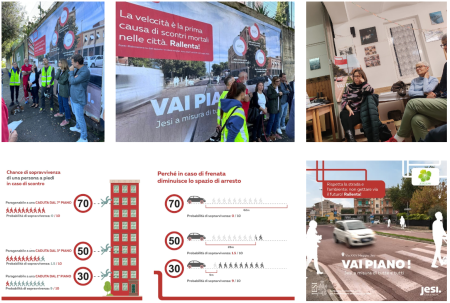
Una delle sfide principali riguarda una cultura radicata che privilegia l'uso dell'automobile, scoraggiando l'adozione di mezzi pubblici e di trasporti alternativi. Questo comportamento si riflette in un mancato rispetto delle normative del codice della strada. Inoltre, c'è una scarsa attenzione verso la protezione degli utenti più vulnerabili, come pedoni e ciclisti. Questo atteggiamento compromette la vivibilità della città, che viene vissuta più come un luogo di transito che come uno spazio di incontro e socializzazione.
Thursday, April 10, 2025
Road safety in Europe and worldwide is still tragically compromised by a high number of accidents and avoidable loss of human lives.
This is compounded by the worrying frequency of vehicle recalls for brake problems, with over 3 million units affected in just two years (ANSA data), a symptom of an intrinsic vulnerability in current systems.
The dependence on rare materials in traditional braking systems and new technologies not only creates economic instability but also generates significant geopolitical implications.
Furthermore, there remains a lack of a reliable and universal mechanical solution capable of improving braking and ensuring safety in the event of failure.
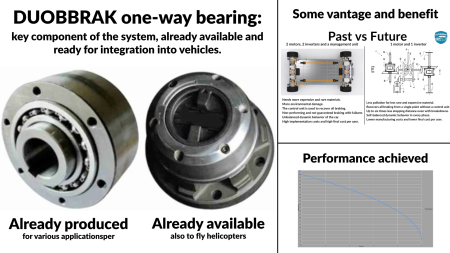
These challenges highlight the urgent need for innovative solutions like DUOBBRAK, capable of overcoming the limitations of current systems, despite the resistance, and mostly the indifference, encountered in promoting it within the industry, accelerators, and public and private institutions
This is compounded by the worrying frequency of vehicle recalls for brake problems, with over 3 million units affected in just two years (ANSA data), a symptom of an intrinsic vulnerability in current systems.
The dependence on rare materials in traditional braking systems and new technologies not only creates economic instability but also generates significant geopolitical implications.
Furthermore, there remains a lack of a reliable and universal mechanical solution capable of improving braking and ensuring safety in the event of failure.
These challenges highlight the urgent need for innovative solutions like DUOBBRAK, capable of overcoming the limitations of current systems, despite the resistance, and mostly the indifference, encountered in promoting it within the industry, accelerators, and public and private institutions
Friday, April 4, 2025
Valerann is tackling critical road safety challenges associated with complexity and criticality of road traffic management and road safety.
Traditional road monitoring systems often rely heavily on fixed infrastructure, which can be limited in coverage and responsiveness. The increase of data sources (CAV, crowdsourced data, navigation apps etc) brings an opportunity to enrich situational awareness of TMCs; but it also brings a challenge of data fragmentation, data overload and confusion as deliver high volumes of unstructured data and false positives, overwhelming operators and delaying meaningful action. In response, Valerann deployed Lanternn by Valerann™, an AI-powered data fusion platform that transforms how traffic data is collected, processed, and acted upon. The key safety challenge being addressed is the speed and accuracy of incident detection. Delays in identifying road incidents can increase the risk of secondary collisions, congestion, and response inefficiency. LbV synthesises diverse data sources—floating car data, roadside sensors, navigation apps, weather feeds, and even social media—into a single coherent operational picture. This fusion allows for earlier detection of accidents, faster validation, and more efficient emergency response. The system not only enhances situational awareness but also supports smarter infrastructure planning by highlighting patterns and bottlenecks. Ultimately, Valerann is modernising traffic management for safer, more resilient roads without the need for costly physical infrastructure expansion.
Traditional road monitoring systems often rely heavily on fixed infrastructure, which can be limited in coverage and responsiveness. The increase of data sources (CAV, crowdsourced data, navigation apps etc) brings an opportunity to enrich situational awareness of TMCs; but it also brings a challenge of data fragmentation, data overload and confusion as deliver high volumes of unstructured data and false positives, overwhelming operators and delaying meaningful action. In response, Valerann deployed Lanternn by Valerann™, an AI-powered data fusion platform that transforms how traffic data is collected, processed, and acted upon. The key safety challenge being addressed is the speed and accuracy of incident detection. Delays in identifying road incidents can increase the risk of secondary collisions, congestion, and response inefficiency. LbV synthesises diverse data sources—floating car data, roadside sensors, navigation apps, weather feeds, and even social media—into a single coherent operational picture. This fusion allows for earlier detection of accidents, faster validation, and more efficient emergency response. The system not only enhances situational awareness but also supports smarter infrastructure planning by highlighting patterns and bottlenecks. Ultimately, Valerann is modernising traffic management for safer, more resilient roads without the need for costly physical infrastructure expansion.
Friday, April 4, 2025
In 2022, 2.017 fatalities happened in the EU where cyclists have been involved representing 10% of all road fatalities.
More than 60% of all accidents between motor vehicles and bicycles occur when turning and crossing because bicycles are not illuminated from the side and the modern front and rear lights fitted emit a very focussed light that cannot be seen from the side.
The side reflectors, which are also mandatory, are only visible when they are illuminated.
For these reasons, both in bad weather and in the dark, bicycles are difficult or impossible to see from the side and are therefore often not noticed when they pass a car on the right-hand side, for example in front of traffic lights.
Bicycles are also difficult to recognise when crossing a road with oncoming traffic, as the multi-LED lights used on motor vehicles today shine much brighter than previous headlights.
Another problem is that car drivers do not keep the required minimum distance. Either because they are unable to judge the correct minimum distance or because they do not recognise bicycles in the dark.
Similarly, motorists are not made aware when they fall below the minimum distance and are therefore unable to react.
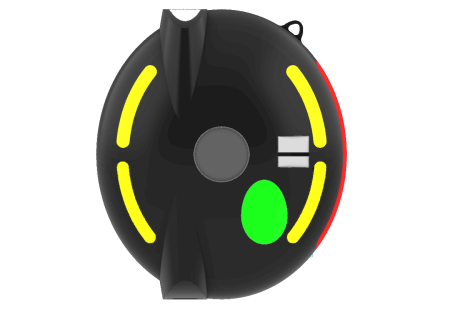
Intelligent, reactive lighting systems for bicycles are therefore needed in urban traffic to indicate to motorists the minimum distance to be maintained, warn them if the minimum distance is not observed and provide permanent side lighting for the bicycle.
More than 60% of all accidents between motor vehicles and bicycles occur when turning and crossing because bicycles are not illuminated from the side and the modern front and rear lights fitted emit a very focussed light that cannot be seen from the side.
The side reflectors, which are also mandatory, are only visible when they are illuminated.
For these reasons, both in bad weather and in the dark, bicycles are difficult or impossible to see from the side and are therefore often not noticed when they pass a car on the right-hand side, for example in front of traffic lights.
Bicycles are also difficult to recognise when crossing a road with oncoming traffic, as the multi-LED lights used on motor vehicles today shine much brighter than previous headlights.
Another problem is that car drivers do not keep the required minimum distance. Either because they are unable to judge the correct minimum distance or because they do not recognise bicycles in the dark.
Similarly, motorists are not made aware when they fall below the minimum distance and are therefore unable to react.
Intelligent, reactive lighting systems for bicycles are therefore needed in urban traffic to indicate to motorists the minimum distance to be maintained, warn them if the minimum distance is not observed and provide permanent side lighting for the bicycle.
Tuesday, February 18, 2025
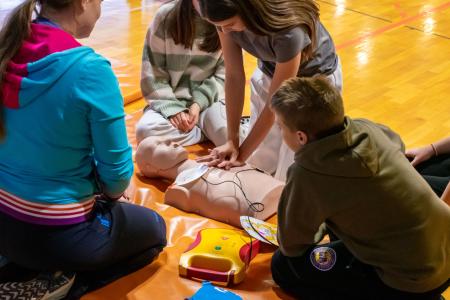
The Technical Day held at Braslovče Primary School on February 23, 2024, in collaboration with the VOZIM Institute, was both practical and educational. The students were first introduced to the DRAJV app and analyzed traffic safety in the municipality. During the event, they created posters and presented proposals to improve safety, which were also supported by Mayor Tomaž Žohar. The students participated in activities at seven stations, including an e-scooter simulator and workshops led by representatives from the Police, the Braslovče Fire Department, and the Žalec Health Center. The VOZIM Institute ambassador, Janez Hudej, shared his personal story about a traffic accident, which gave the students a deeper insight into the seriousness of road safety. The event emphasized the importance of involving young people in shaping road safety solutions.

Thursday, February 13, 2025
The event focuses on an initiative aimed at improving road safety for young people, especially e-scooter and e-bike users. A survey by Zavarovalnica Triglav showed that only a little over half of young people feel safe when riding an e-scooter, and many have already experienced accidents. The lack of protective clothing, helmets, and reflective accessories contributes to greater risks. In the "Ne bluzi, z glavo kruzi" (Don’t Play It Cool, Use Your Head) initiative, the Vozim Institute, Zavarovalnica Triglav, and Yootree Creative agency collaborated to encourage safer e-scooter use among young people. By working with design students, they created a unique collection, "Dejmo se videt" (Let's Be Seen), of reflective clothing that combines safety with modern style. The collection was presented on October 17, 2024, at Ljubljana Fashion Week.The students used innovative reflective materials to design fashionable yet safe products. The collection was presented at Ljubljana Fashion Week, where it gained significant attention. The goal was to raise awareness about the importance of visibility in traffic, especially during the autumn and winter months. The initiative continues with workshops and public events, aiming for the products to become part of young people’s everyday style. The main goal of the initiative is to reduce the risk of accidents and encourage young people to prioritize safety while maintaining their personal style.
21 November 2024 09:00 – 23 November 2024 17:00
Rimini Exhibition Center
Italy
Monday, June 24, 2024
One of the problems faced by every road safety body is that the consequences of drink driving are abstract to people that have never felt them. It’s hard to imagine losing your licence, ending up in prison, killing someone, or being left with permanent disabilities because most of us have never experienced these things. We can logically understand them, but we don’t feel them. For the first time, using Virtual Reality, we could create a shocking and deeply resonant immersive experience and make these consequences feel real.
Data collected by the organisation showed that there had been a resurgence in drink driving in Ireland. A legacy of historical anti-drink driving advertising had reduced the behaviour, but a new cohort of younger people, who have never been exposed to it, were drinking and driving anew. These findings instigated creating a campaign to help reduce this worrying trend against younger adult males who considered themselves invincible and immune to road traffic collisions. For the first time, using Virtual Reality (VR), we could create a shocking and deeply resonant immersive experience and make these consequences feel real.
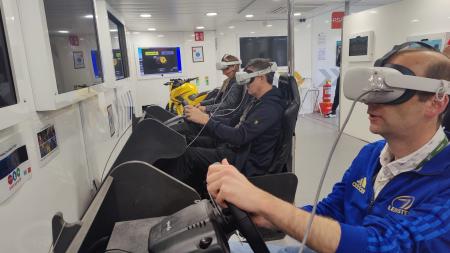
Our response was ‘Consequences’: a cut-through VR experience that toured the country and challenged the user by putting them in the shoes of a drunk driver, bringing this serious message home in a completely new and immersive way. Different storylines allowed the user to experience the full extent of the agonising consequences of drink driving—from injury to prosecution.
Data collected by the organisation showed that there had been a resurgence in drink driving in Ireland. A legacy of historical anti-drink driving advertising had reduced the behaviour, but a new cohort of younger people, who have never been exposed to it, were drinking and driving anew. These findings instigated creating a campaign to help reduce this worrying trend against younger adult males who considered themselves invincible and immune to road traffic collisions. For the first time, using Virtual Reality (VR), we could create a shocking and deeply resonant immersive experience and make these consequences feel real.
Our response was ‘Consequences’: a cut-through VR experience that toured the country and challenged the user by putting them in the shoes of a drunk driver, bringing this serious message home in a completely new and immersive way. Different storylines allowed the user to experience the full extent of the agonising consequences of drink driving—from injury to prosecution.

Monday, June 24, 2024
Con el objeto de llegar a los objetivos de la Visión Cero de reducir la siniestralidad en las vías ha surgido la nueva normativa GSR-II, con la cual pasa a ser obligatoria la incorporación de nuevos elementos de seguridad activa en los vehículos europeos. Esta normativa comienza a aplicarse a partir de julio de 2024 para todos los vehículos nuevos, entre los que se encuentran los autobuses, pero ¿qué hay de las flotas que ya se encuentran en circulación?
Los autobuses urbanos suponen un medio de transporte eficaz para desplazarse, siendo en este sentido EMT Madrid un elemento básico de movilidad en la capital española. La edad media de las flotas en España, de unos 11,5 años según la AEFA, señala que el periodo de tiempo que pasará hasta que la totalidad de la flota que se encuentra en circulación cuente con los sistemas de seguridad activa necesarios para reducir los riesgos de su convivencia con los usuarios vulnerables en la vía puede ser mayor al deseado.
Para poder acercar estas soluciones a los vehículos que ya se encuentran en circulación, acelerando su proceso de optimización y alargando el uso y evitando su obsolescencia, Sistemas ADAS ha trabajado junto a la EMT Madrid y a los desarrolladores de esta tecnología para adaptarla a dichos vehículos.
Los autobuses urbanos suponen un medio de transporte eficaz para desplazarse, siendo en este sentido EMT Madrid un elemento básico de movilidad en la capital española. La edad media de las flotas en España, de unos 11,5 años según la AEFA, señala que el periodo de tiempo que pasará hasta que la totalidad de la flota que se encuentra en circulación cuente con los sistemas de seguridad activa necesarios para reducir los riesgos de su convivencia con los usuarios vulnerables en la vía puede ser mayor al deseado.
Para poder acercar estas soluciones a los vehículos que ya se encuentran en circulación, acelerando su proceso de optimización y alargando el uso y evitando su obsolescencia, Sistemas ADAS ha trabajado junto a la EMT Madrid y a los desarrolladores de esta tecnología para adaptarla a dichos vehículos.
Monday, June 24, 2024
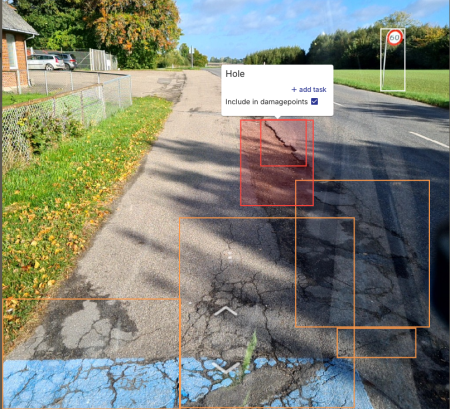
We’re addressing multiple road safety problems:`
- Improving the work safety of road inspectors by reducing time being physically in the middle of the road and reducing multitasking while driving.
- Improving road safety for cars, motorcycles and bicyclist by reducing potholes and defect road inventory such as faded road signs, damaged bollards, etc.
- Improving road safety for pedestrians by mapping crosswalks with worn-out lane markings as well as pavement uplift that causes people to fall.
Image examples can be found attached
- Improving the work safety of road inspectors by reducing time being physically in the middle of the road and reducing multitasking while driving.
- Improving road safety for cars, motorcycles and bicyclist by reducing potholes and defect road inventory such as faded road signs, damaged bollards, etc.
- Improving road safety for pedestrians by mapping crosswalks with worn-out lane markings as well as pavement uplift that causes people to fall.
Image examples can be found attached