
Educational staff

Tuesday, May 27, 2025
Due to the specific characteristics of the Warmian-Masurian Voivodeship — extensive forested areas, type of the road infrastructure, and the predominance of single-carriageway, two-way roads — we record a higher-than-average number of severe traffic incidents compared to the national average. These include collisions with wild animals, crashes into roadside trees, and head-on vehicle collisions. Statistically, these are the leading causes of fatal accidents in our region. If we were able to reduce the number of such incidents to the national average, then — considering the number of fatalities — we would have a real chance of becoming the safest voivodeship in Poland. We recognize the need for infrastructural improvements: traffic separation, reducing the number of potentially hazardous objects within the road zone, and, equally important, the need to change driver behavior. Excessive speed is a common factor contributing to accidents, which we, as the Police, strive to address through monitoring and speed enforcement. However, we believe that effective educational initiatives can bring measurable improvements in road user awareness and, in turn, lead to meaningful changes in behavior on the road.
Tuesday, May 27, 2025
Serious accidents involving the so-called “blind spot” of heavy commercial vehicles, as well as a safety summit convened years ago by the city government, prompted the Vienna Chamber of Commerce to take initiative as early as 2017. The goal of the traffic safety project "The Dangers of the Blind Spot” is to raise awareness among pupils (3rd and 4th grade, by the age of 8-12 years) about potential sources of danger through theoretical instruction and then to train proper behavior in the area of the blind spot at a practical training station.
Monday, May 26, 2025
Road crashes is a major societal problem worldwide, especially in cities where pedestrians, cyclists and motorcyclists are highly exposed and vulnerable in case of a collision. The new policy of city-wide 30 km/h speed limit is intended to ensure vulnerable road users’ safety accounting for 70% of deaths in road crashes in urban areas in Europe.

Scientists urge continuously for lower speeds; however, speeding remains a model and sought behaviour among most drivers and riders, especially the young. The voices of vulnerable road users for less speeding remain weak towards our long-established car and speed-centred societies.

The National Technical University of Athens (NTUA) launched the innovative and original 30 Marathons in 30 months campaign (www.georgeruns30x30.com), aimed at promoting city-wide 30 km/h speed limit in all cities worldwide, as a key policy for safer, healthier and greener cities for all. The NTUA campaign was implemented by the internationally renowned NTUA Professor George Yannis, who is ranked 2nd in Europe and 9th worldwide in road safety science, and supported by the NTUA Road Safety Observatory (https://www.nrso.ntua.gr), a Centre of Research and Innovation Excellence on road safety with global recognition.

This impactful campaign represents a major shift towards a more human-centred approach to urban planning, where people are at the heart of design decisions.
Wednesday, May 21, 2025
At Grupo Santalucía and its Agency Network, we are concerned about accidents caused by mobility and road safety issues.

Since 2021, we have gone beyond the business sphere of the Group. We aim to extend our concern, means, and resources to society, with a special focus on older adults, to raise awareness and educate senior citizens about road risks they face, especially in cities as pedestrians. We also want to make them protagonists of the change through active listening to their requests as road users, with the aim of improving mobility and safety in their environments.

To this end, we began senior road safety campaigns in 2021. The challenges we encountered and that shape the mobility of this group include:

7 out of 10 seniors live in cities with more than 10,000 inhabitants.

Walking is a common form of travel among older adults.

Psychomotor conditions can lead to incidents during travel.

40% of traffic fatalities occur in urban areas.

Of those, 69% are pedestrian fatalities.

The fatality rate in these accidents is 4.2 times higher than for the rest of the population, rising to 9.2 for those over 85.
Sunday, May 18, 2025
For a long time our roads have prioritized movement, and their design was left to traffic engineers.

But with the many challenges we face, streets need to serve more purposes beyond traffic flow. Streets are shared public spaces that should serve more goals (SDGs) and should reflect the diverse needs of all users. To turn this conversation around we launched “De rechtvaardige straat”(The Just Street).

The five guiding principles of the manifesto reframe how streets can be viewed and shaped. Creating a more inclusive, safe, and a more social and vibrant space between buildings. Safety is emphasized through thoughtful design that invites walking, cycling, and lingering without fear. Key elements include variety, accessibility, and active public participation in shaping the street environment.

Supported by thousands of citizens and hundreds of organizations, we offer this community actionable tools: inspiring content, events, and an annual action week. Together, we reclaim the street as a truly public space—where even drivers feel safe from making unintended mistakes, and all users can coexist with confidence and care.

Our goal is nothing less than systemic change: towards streets that foster safety, equity, and livability for everyone. Through De Rechtvaardige Straat, we are building a new understanding of what purpose streets serve and in parallel outline a new standard for road design and use—one that values every life and every journey. More safe streets as a result of more just and human centered streets.
Thursday, May 15, 2025
There is a large number of safe driving courses for drivers on polygons in the Czech Republic. Drivers are taught how to react when driving in poor conditions, while being in the safe environment of a closed polygon area. It prepares them for safer driving in traffic. However, these courses are only available to drivers without significant medical limitations.

In the Czech Republic people with hearing impairment or physical disabilities are also able to drive. Until recently, there were no safe driving courses for people with disabilities and therefore they did not have the same training opportunities as drivers without ones. Thus, in regular traffic there is a group of drivers interested in safety education that is not available to them. Because of that they put themselves and those around them at greater risk.

Driving calmly and without stress should be possible for every driver, regardless of the external driving conditions. Safe driving courses allow the driver to experience dangerous situations and then not be afraid of them in regular traffic. These courses should be available to all groups of drivers that are active participants in traffic: including drivers with disabilities, who currently often face hidden barriers just entering driving schools. Platforma VIZE 0, which has been devoted to drivers’ education for a long time, has taken this education gap under its wing by creating the Courses for Drivers with Disabilities. By organising these courses, a database of participants is created. These participants not only actively improve their driving skills but also provide valuable feedback. It helps to expose discriminatory attitudes in the current system of training future and current drivers, such as admission to driving schools etc. The courses then serve as the starting point on the way to developing a new methodology for working with drivers with disabilities: from adjustments in teaching and instructors' approach to recommendations for final exams. The methodology will make life easier not only for those with disabilities but also for instructors in driving schools.
Wednesday, May 14, 2025
Traffic safety and mobility education is an important component of the Safe System approach in Europe. The educational objectives go beyond the mere prevention of accidents and include the protection of the environment and health. Throughout Europe, efforts are being made to provide such safety education at all school levels. In Austria, traffic safety education is already firmly anchored in the elementary school curriculum. Although an interdisciplinary approach is required in secondary schools, there are no specific lessons scheduled for this purpose, which makes it more difficult to implement in the classroom. However, developmental psychological findings and accident statistics show that traffic safety education is particularly important after elementary school. A comprehensive and continuous educational concept is therefore essential in order to provide children and young people with the necessary skills to participate safely and responsibly in traffic. In order to achieve the competency goals, set by the Ministry of Education, teachers require support in the form of specific lesson plans and materials. Therefore, in 2018 the KFV “Risi & Ko” teaching materials for secondary schools level 1 were created.
Wednesday, May 14, 2025
The aim of determining fitness to drive is to achieve a balance between minimising any driving-related road safety risks for the individual and the community and maintaining the driver’s lifestyle and employment-related mobility independence. Driving a car is a complex and dynamic task and there is a wide range of conditions that temporarily affect the ability to drive safely like consuming substances or fatigue. Professional drivers are particularly affected by fatigue. The main effect of fatigue is a progressive withdrawal of attention from the road and traffic demands leading to impaired driving performance. The particular practice of professional drivers include working long hours, prolonged night work, working irregular hours, little or poor sleep, and early starting times which in many cases lead to fatigue. Fatigue causes reduced alertness, longer reaction times, memory problems, poorer psychometric coordination, and less efficient information processing. The results of different surveys world-wide show that over 50% of long-haul drivers have at some time almost fallen asleep at the wheel.
Tuesday, May 13, 2025
Low Awareness and Misuse of Child Restraint Systems (CRS)
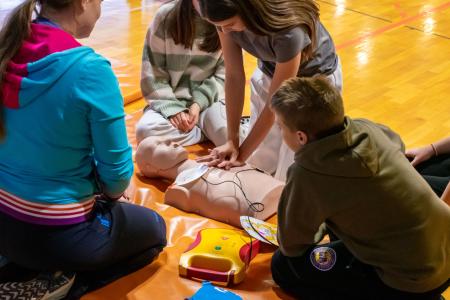
Despite legislation requiring child car seats, many children in Romania travel unrestrained or improperly secured. The event highlights the importance of proper CRS selection and installation, using crash simulations and expert demonstrations to correct misconceptions and promote evidence-based practices (e.g., extended rear-facing travel).

High Risk Among Young and Inexperienced Drivers
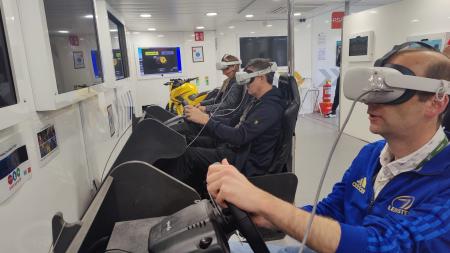
Adolescents and newly licensed drivers are overrepresented in serious road crashes due to inexperience, distraction (especially smartphone use), alcohol or drug influence, and fatigue. The event uses VR simulations and interactive sessions to show real consequences, helping young drivers internalize the impact of their decisions behind the wheel.

Vulnerable Road Users: Pedestrians and Cyclists
Children and teens are especially vulnerable as pedestrians and cyclists, often due to low visibility, risky crossings, and lack of road safety education. Through distorted-vision simulations (alcohol, cannabis, fatigue), the event raises empathy and awareness about the fragility of vulnerable road users and the need for responsible behaviour from all traffic participants.

Parental Misconceptions and Risk Normalization
Many parents underestimate the consequences of everyday traffic choices—such as holding a child in their lap or disabling safety systems for comfort. Our activities directly engage parents through emotional storytelling, live demonstrations, and one-on-one safety consultations.

Lack of Intersectoral Collaboration in Road Safety Education
Road safety is often treated in silos (e.g., enforcement without education). This event brings together NGOs, emergency services, police, international road safety experts, and civil society in a unified effort to educate, engage, and empower local communities.

Gaps in Road Safety Education in Schools and Public Campaigns
Formal education on road safety is inconsistent and often outdated. Our project develops modern, engaging, and scalable tools (e.g., VR technology, interactive workshops) that can be replicated in schools and youth programs.

Monday, May 12, 2025
With this project, we contribute to the development of courses by offering standardized, consistent quality for various risk groups.
To provide substantive expertise through a new technical solution. This solution simplifies the explanation of complex traffic risks.
Subscribe to Educational staff