
Young adults 17-25

Friday, May 30, 2025
The first major challenge was to make this pastoral action known within the Church's own structure in Ourense. The CEE's Road Pastoral Department was created in Spain more than 50 years ago, but in many dioceses, no initiatives are carried out and priests are unaware of it. The surprising thing was that families, communities, and neighbors, as soon as we began working on these initiatives, began to follow us, asking for more action, and feeling supported in the loneliness caused by the loss of a loved one, a friend, a neighbor, or a car accident. Every year, the number of people participating in the scheduled sessions increases.
Friday, May 30, 2025
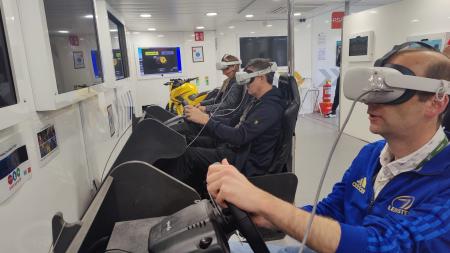
Our initiative addresses critical road safety challenges that are often overlooked in traditional driver education. Most driving schools focus on basic vehicle operation, but not on real-life risk anticipation, distraction management, or defensive mindset.

Key problems tackled by our VR Defensive Driving System include:

Driver distraction, especially due to smartphones and infotainment systems

Poor anticipation of traffic risks, particularly in urban and mixed traffic

Lack of situational awareness and understanding of the “big picture” around the vehicle

Insufficient consideration for other road users, including vulnerable groups

Specific risks related to pedestrians and cyclists, especially in city environments

Our project empowers drivers of all ages and experience levels to build mental habits that keep them and others safe – by learning to observe more, react earlier, and drive smarter.
Thursday, May 29, 2025
We are addressing several key road safety challenges, particularly the high rates of fatalities and serious injuries on Irish roads, many of which are caused by drink driving. Between 1 January and 24 July 2024, there were 109 fatalities on Irish roads, 17 more than during the same period in 2023. Among these, 43 were drivers and 14 were motorcyclists. One of the major factors contributing to these fatalities is drink driving, with research showing that 37% of driver fatalities (from 2015-2019) involved a positive alcohol test.
To tackle this issue, the Government's Road Safety Strategy Action Plan 2021-2024 has outlined a need for targeted public education campaigns addressing the key causes of death and serious injuries, with a focus on high-risk groups. In April 2024, the Irish Government allocated additional funding to the Road Safety Authority (RSA) to combat the rising number of road deaths.
As part of this effort, we launched a pilot program featuring the Flinebox breathalyzer kiosks, starting at Electric Picnic, Ireland’s largest music festival. It uses advanced Drager alcohol sensor technology, where users blow into a straw, and the result appears on a screen in just 10 seconds. A disclaimer on the screen makes it clear that the breathalyser’s results are for informational purposes only and don’t have legal force. By making this technology easily accessible in social settings like festivals, we aim raise awareness and encourage individuals to make safer, more informed choices before getting behind the wheel
Thursday, May 29, 2025
TyreSafe is addressing the critical issue of tyre-related road casualties by equipping all road users with the knowledge to identify and act on poorly maintained or illegal tyres. Our mission follows the Safe System approach, recognising human error and injury tolerances, and aims to eliminate harm through education, engineering, and enforcement. TyreSafe’s focus is on reducing incidents caused by poor tyre maintenance, illegal tread depth, under-inflation, and other defects. Research consistently shows tyres are one of the most neglected safety components. Data from our 2023 Tread Depth Survey revealed over 6 million tyres are replaced annually when already illegal. A 2022 post-collision investigation revealed that 81% of vehicles involved in incidents had tyre defects. Despite this, under-reporting in Police collisions data, Stats19, limits national awareness. TyreSafe’s campaigns, research and stakeholder engagement address this knowledge gap. We work with government, emergency services, tyre industry and other road safety groups to increase understanding and action. TyreSafe’s vision is zero harm from tyre defects on UK roads. By raising awareness, influencing behaviour and advocating for better data and enforcement, we aim to instil long-term change and reduce preventable tyre-related collisions and casualties.
Thursday, May 29, 2025
Children and young people (till 25 years old) make up 41% of the world’s population (United Nations, 2024) and about 25% of this age group is represented in the EU population (Eurostat, 2024). They are an active group, often dependent on public space for movement and social interaction. Yet, that public space is not designed with them in mind, nor does it reflect their world and needs. This has consequences. Every day in Flanders, an average of 10 students (aged 3 to 18) are involved in traffic crashes on their way to school (VIAS Institute, 2019–2023). Over 60% of those victims were walking or cycling. In Europe there were still 455 fatalities amongst children and 2 388 fatalities amongst youth which shows that mobility is not yet inclusive, safe and of high quality for all.
Poorly adapted public space brings dangers and challenges, but it also has more subtle barriers. Children and young people are becoming increasingly less physically active. Regular movement is however essential for both their physical and mental health. One way to encourage this movement is by promoting walking and cycling from an early stage and at a young age.
Inadequate public space also negatively affects the independence of children and young people. About a quarter of students in Flanders are driven by car even for short trips between home and school. That’s unfortunate, because travelling independently helps children learn how to navigate their environment, assess risks, and interact with other road users. This builds confidence and equips them with the skills—and the right—to travel alone.
Thursday, May 29, 2025
The 'EuroTarn' Association was set up in 1997 (by myself) to encourage young people to discover the countries of the European Union, and thus learn about other European cultures and languages. The association's motto from the outset was to inspire young people to 'move in a moving world'.
Between 1997 and 2007, we developed Universities exchanges with various regions. In 2007, we created some actions to attract young people (in the Tarn area) to be more interested in Europe, and to develop their 'European citizenship' and their feeling of belonging to a same European community; And Road safety was one of the very first topic that we decided to tackle with the very first European day of Road safety in April 2007. Therefore we decided to run campaigns to talk about Road safety and... Europe, and we decided to start to visit schools to educate young people.
Thursday, May 29, 2025
The main road safety challenge that was addressed by the project is driving under the influence (DUI) and the impaired judgement and delayed reaction time as consequences. Driving under the influence of alcohol or drugs significantly impairs a driver's cognitive and motor functions, leading to poor decision-making and slower responses to hazards.

ARV-auto battles this challenge by:
o Creating awareness campaigns: Implementing targeted public education campaigns highlighting the dangers of impaired driving and promoting sober alternatives such as designated drivers and ride-sharing.
o Supporting law enforcement: Collaborating with local police on sobriety checkpoints and enhanced DUI patrols, especially during high-risk periods (e.g., weekends, holidays).
o Doing policy advocacy: Supporting stricter DUI laws, including lower blood alcohol content (BAC) limits and the use of ignition interlock devices for repeat offenders.

Wednesday, May 28, 2025
In Valladolid, one of the main road safety challenges we identified was the safety of children on school routes, especially at intersections with high vehicle flow and limited visibility. Traditional pedestrian crossings, marked only by paint, often fail to capture drivers’ attention — particularly during early morning or late afternoon hours when light conditions are poor, and traffic is dense.

Children, due to their smaller size and unpredictable behavior, are among the most vulnerable road users. Despite the presence of static signage, many drivers fail to reduce speed near school zones, and pedestrians, especially children, faced heightened risks when crossing.

We addressed this issue by implementing the Retrolight System®, an innovative smart crosswalk solution with embedded LED panels and intelligent vertical signage, in one of Valladolid’s key school routes. The system uses real-time sensors to detect pedestrians’ intention to cross and activates dynamic lighting both on the ground and in vertical signs, immediately alerting approaching drivers. By combining active visual cues with automated detection, the system significantly improves pedestrian visibility, raises driver awareness, and ultimately reduces crossing-related risks. This project serves as a replicable model for enhancing safety on school routes across urban environments.
Wednesday, May 28, 2025
Program design to solve several road safety challenges for higher school students:

1. Expand Knowledge About Safe Road Traffic Practices
Many students lack formal education on road safety beyond basic traffic rules.
• Providing comprehensive road safety theory, including updated traffic laws, defensive driving techniques, and situational awareness.
• Teaching risk assessment skills, such as identifying potential hazards and understanding the impact of speed, fatigue, and distraction.
• Simulations and case studies that help students understand real-world consequences of unsafe driving behaviors.
2. To develop knowledge about the safety and use of micromobility vehicles.
Promote the correct use of bicycles, e-scooters and other micromobility vehicles as an alternative to promote green mobility culture.
• Offering specific modules on micromobility, covering legal regulations, safe riding practices, and correct equipment use (e.g., helmets, lights).
• Demonstrating shared space etiquette, including how to safely interact with pedestrians, cars, and other micromobility users.
• Promoting vehicle maintenance awareness, like checking brakes, battery levels, and tire conditions.
3. Road safety awareness, road culture and sense of responsibility.
Road safety is not only about knowledge and traffic roles, but also about attitudes and behaviors.
• Workshops on respectful and ethical driving, emphasizing patience, empathy, and mutual respect among all road users.
• Addressing aggressive driving behaviors, such as road rage, tailgating, and inappropriate honking.
• Fostering civic responsibility, encouraging students to act as positive role models and promote safe practices in their communities.
Tuesday, May 27, 2025
Due to the specific characteristics of the Warmian-Masurian Voivodeship — extensive forested areas, type of the road infrastructure, and the predominance of single-carriageway, two-way roads — we record a higher-than-average number of severe traffic incidents compared to the national average. These include collisions with wild animals, crashes into roadside trees, and head-on vehicle collisions. Statistically, these are the leading causes of fatal accidents in our region. If we were able to reduce the number of such incidents to the national average, then — considering the number of fatalities — we would have a real chance of becoming the safest voivodeship in Poland. We recognize the need for infrastructural improvements: traffic separation, reducing the number of potentially hazardous objects within the road zone, and, equally important, the need to change driver behavior. Excessive speed is a common factor contributing to accidents, which we, as the Police, strive to address through monitoring and speed enforcement. However, we believe that effective educational initiatives can bring measurable improvements in road user awareness and, in turn, lead to meaningful changes in behavior on the road.
Subscribe to Young adults 17-25