Car drivers

Friday, May 30, 2025
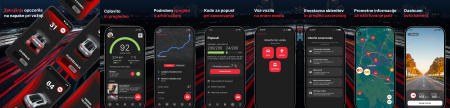
Nextop Co-pilot is an intelligent driving assistant app designed to enhance road safety and operational efficiency for professional drivers. It operates fully offline using preloaded routes and special geofences to deliver real-time, on-edge audio alerts—no network connection required.

By combining GPS tracking with customizable geofence zones, the app provides precise voice guidance about critical road segments, including dangerous curves, steep downhills, speed limits, obstacle zones, and other risk areas. Fleet operators can personalize messages per route or region, offering context-aware advice that improves driver awareness and decision-making.

The solution also integrates vehicle health data, enabling real-time alerts for issues like overheating, brake wear, or system warnings—helping to prevent breakdowns and improve maintenance planning.

All processing happens directly on the device, ensuring fast, reliable alerts even in remote areas. Designed for fleets and logistics operations, Nextop Co-pilot empowers drivers with the information they need, exactly when they need it—boosting safety, compliance, and route efficiency.
Friday, May 30, 2025
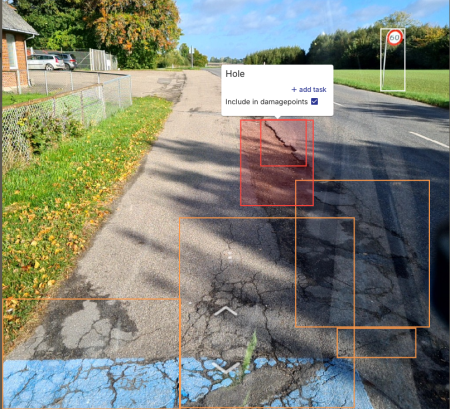
One of the key challenges in modern road safety is ensuring that driver assistance systems (ADAS) function reliably and accurately in real-world conditions. Among these, the Speed Limit Information Functions (SLIF), which display the current speed limit to the driver, are critical to encouraging compliant and safe driving behavior.

However, if these systems display incorrect or outdated speed information, drivers may unintentionally drive too fast or too slow for the road conditions, increasing the risk of collisions, fines, and public distrust in vehicle technology.

IVEX has developed an innovative platform that enables vehicle manufacturers and consumer testing organizations like Euro NCAP to objectively evaluate how well these systems perform on real roads, not just in simulations or controlled environments.

By enabling large-scale, real-world testing and providing quantifiable performance insights, IVEX helps:

- Manufacturers improve the reliability of their ADAS systems,
- Regulators and safety organizations set smarter standards,
- Consumers make informed decisions about the safety of their vehicles.

Ultimately, IVEX's solution contributes to:
- higher transparency,
- better engineering,
- fewer speed-related accidents.

Helping advancing Europe’s Vision Zero goals and making roads safer for everyone.
Friday, May 30, 2025
The main road safety challenges we are addressing relate to the increasing number and vulnerability of older road users in traffic.
As life expectancy increases and people remain mobile longer, the proportion of senior drivers is growing. This trend brings several safety-related challenges:
1. Age-related decline in driving abilities:
With age, many individuals experience reduced visual acuity, slower reaction times, decreased attention span, and limited cognitive and physical flexibility — all of which can impair driving performance and increase crash risk, particularly in complex traffic situations.

2. Lack of awareness about new traffic infrastructure and rules:
Many older drivers may not be familiar with modern traffic features such as roundabouts, dynamic signage, or changes in highway driving behavior. This lack of familiarity can lead to confusion, hesitation, or incorrect maneuvers.

3. Delayed self-recognition of diminished driving fitness:
Seniors often have difficulty recognizing or accepting their own limitations. Without proper guidance, they may continue driving when it is no longer safe, putting themselves and others at risk.

4. Insufficient communication about legal obligations:
Older drivers are often unaware of the legal requirements surrounding driver’s license renewal, mandatory medical assessments, and other responsibilities related to continued driving.

5. Limited knowledge about alternative mobility options:
When it becomes unsafe to drive, older adults may not know what options are available to them, which can lead to social isolation and a decline in independence.

6. Stereotypes and lack of societal support:
Older drivers are often unfairly stigmatized, which may discourage them from seeking help, discussing concerns, or exploring new solutions. At the same time, the broader community may not be sufficiently informed on how to support them.
________________________________________
Our initiative addresses these problems through a combination of awareness-raising, education, respectful dialogue, and collaboration with stakeholders. The goal is to promote safer, more confident participation of older adults in traffic — whether as drivers, pedestrians, cyclists, or passengers.
Thursday, May 29, 2025
TyreSafe is addressing the critical issue of tyre-related road casualties by equipping all road users with the knowledge to identify and act on poorly maintained or illegal tyres. Our mission follows the Safe System approach, recognising human error and injury tolerances, and aims to eliminate harm through education, engineering, and enforcement. TyreSafe’s focus is on reducing incidents caused by poor tyre maintenance, illegal tread depth, under-inflation, and other defects. Research consistently shows tyres are one of the most neglected safety components. Data from our 2023 Tread Depth Survey revealed over 6 million tyres are replaced annually when already illegal. A 2022 post-collision investigation revealed that 81% of vehicles involved in incidents had tyre defects. Despite this, under-reporting in Police collisions data, Stats19, limits national awareness. TyreSafe’s campaigns, research and stakeholder engagement address this knowledge gap. We work with government, emergency services, tyre industry and other road safety groups to increase understanding and action. TyreSafe’s vision is zero harm from tyre defects on UK roads. By raising awareness, influencing behaviour and advocating for better data and enforcement, we aim to instil long-term change and reduce preventable tyre-related collisions and casualties.
Thursday, May 29, 2025
Children and young people (till 25 years old) make up 41% of the world’s population (United Nations, 2024) and about 25% of this age group is represented in the EU population (Eurostat, 2024). They are an active group, often dependent on public space for movement and social interaction. Yet, that public space is not designed with them in mind, nor does it reflect their world and needs. This has consequences. Every day in Flanders, an average of 10 students (aged 3 to 18) are involved in traffic crashes on their way to school (VIAS Institute, 2019–2023). Over 60% of those victims were walking or cycling. In Europe there were still 455 fatalities amongst children and 2 388 fatalities amongst youth which shows that mobility is not yet inclusive, safe and of high quality for all.
Poorly adapted public space brings dangers and challenges, but it also has more subtle barriers. Children and young people are becoming increasingly less physically active. Regular movement is however essential for both their physical and mental health. One way to encourage this movement is by promoting walking and cycling from an early stage and at a young age.
Inadequate public space also negatively affects the independence of children and young people. About a quarter of students in Flanders are driven by car even for short trips between home and school. That’s unfortunate, because travelling independently helps children learn how to navigate their environment, assess risks, and interact with other road users. This builds confidence and equips them with the skills—and the right—to travel alone.
Thursday, May 29, 2025
Based on our topic modelling study of road safety literature for older EU road users, we have identified several critical challenges that disproportionately affect the ageing population. First, older pedestrians and cyclists face significantly higher fatality rates due to frailty and vulnerability, especially in urban environments lacking safe infrastructure. Our findings highlight the urgent need for age-friendly design, including 30 km/h zones, improved crosswalks, and well-maintained sidewalks.
Second, while targeted driver training (cognitive, visual, and simulator-based) can reduce crash risk by up to 30%, these programs remain small-scale, methodologically inconsistent, and underfunded. Third, although technologies like Advanced Driver Assistance Systems (ADAS) offer safety benefits, they are underutilized by older drivers due to usability barriers.
We also address a key policy issue: the tension between safety and mobility. Arbitrary age-based licensing restrictions risk undermining elderly independence. Evidence-based, functional fitness-to-drive assessments are needed.
Lastly, our study reveals major gaps in research concerning emerging mobility modes (e.g., e-bikes, scooters) and underserved populations like older pedestrians. By applying a novel machine learning approach across multiple databases, we mapped these gaps and proposed evidence-driven solutions in infrastructure, education, vehicle technology, and licensing policy, aligned with EU Vision Zero goals and the UN Decade of Action for Road Safety
Thursday, May 29, 2025
Since the earliest days of the automobile, aquaplaning – when a vehicle loses grip due to a layer of water between the tires and the road – has remained one of the few critical safety challenges still unresolved by today’s technologies. It continues to cause thousands of fatalities annually, and it’s estimated that around 20% of road accidents occur in low-grip conditions, often linked to rain or standing water.
Despite decades of development in passive and active safety systems, no solution currently exists to restore grip once aquaplaning begins. This makes it a persistent threat for all drivers, and a major obstacle to the safe deployment of autonomous vehicles.
The Aquaplaning Intelligent Solution (AIS) by Easyrain addresses this safety gap by actively restoring tire-road contact in real time: the system sprays high-pressure water in front of the front tires to break the water layer causing aquaplaning. AIS is the first system designed specifically to prevent aquaplaning, offering a new layer of safety where existing technologies fall short. While its benefits are immediate for today’s road users, AIS also contributes to the essential safety required to enable autonomous driving in all weather conditions.
Thursday, May 29, 2025
The LEDONE Connected project began in early 2021, following the publication of new Spanish regulations promoting connected emergency signaling, specifically through the Real Decreto 159/2021. The objective was to develop a V16 emergency light that would not only meet legal standards but go further in terms of safety, visibility, and connectivity. Sustainability was not a regulatory requirement, but a value deeply embedded in Erum Vial's philosophy and business model.

The first phase focused on R&D, resulting in a high-visibility design (the tallest on the market) with 360° lighting powered by 10 high-intensity LEDs, a dual magnetic/adhesive fixation system for universal vehicle compatibility, and the optional LEDONE Arrow for enhanced lateral visibility in large vehicles.

Erum Vial integrated NB-IoT connectivity provided by Vodafone, ensuring reliable communication with national road safety authorities. Additionally, we developed the LEDONE mobile app to offer real-time connection confirmation, direct access to emergency contacts, and tow tracking tools.

The project followed a phased timeline:

• 2021: Technical research, regulatory analysis, and initial design with a focus on safety, visibility, and integration of IoT.
• 2022–2023: Industrialization of the product in Erum's manufacturing plant in Alcoy, using 100% recycled plastic and applying sustainability practices as a corporate commitment—not due to any regulatory mandate.
• 2024–2025: Full-scale distribution across Spain with more than 20,000 sales points and ongoing collection of field data for product improvement.

Key activities include app development (LEDONE App), firmware updates, user feedback analysis, and public awareness campaigns on connected safety devices. The project is ongoing and ready for European scalability, with continuous improvement based on real-world use and user feedback.

Wednesday, May 28, 2025
In 2024, Kerry County Council’s Road Safety Office launched a series of road safety campaigns, with the lead conference aimed at older road users and aligning with ‘Transportation’ a World Health Organisation Age Friendly Theme. This event was delivered in partnership with Age Friendly Kerry and Older People’s Council Kerry and in association with An Garda Síochána and the Road Safety Authority.
The conference addressed changes in road layouts, signage, speed limits, road traffic laws, and how vehicles and driving habits have changed. It focused on promoting safer driving behaviour. Presentations were delivered in plain language to ensure all attendees could fully engage.
The event offered older drivers an opportunity to share their experiences and raise concerns about their safety on the roads. The event served as an information session and a valuable opportunity for engagement with older road users.
Wednesday, May 28, 2025
The stagnation of accident and mortality figures in Spain, particularly regarding run-off-road incidents, demonstrates that traditional road safety solutions, while still essential, have reached their maximum possible impact. Road network authorities must therefore immediately commit to new, disruptive, and innovative measures. An urgent response is required to make the European goal of Zero Victims by 2050 achievable, and this response must be supported by solutions that harness the potential of technology and artificial intelligence.
The main pain points are as follows:
1. High accident rate: Worrying levels of accidents, run-off-road incidents, and pedestrian collisions persist, resulting in severe human and economic consequences.
2. Reactive rather than preventive safety: Existing systems intervene only after an incident to minimise its consequences. There are very few real-time risk detection and alert mechanisms in place.
3. Lack of connected response: There are no infrastructure-based solutions capable of automatically detecting incidents or run-off-road events unless incorporated by the vehicle itself, which often leads to critical delays in notifying emergency services or alerting other road users.
4. Limited technological adaptability: Many roads lack basic supplies such as electricity or signal coverage for remote management.
5. Level of investment: While national authorities are progressively beginning to invest in advanced technological solutions, budgets remain limited, often restricted to pilot programmes and trials without genuine commitment. In numerous regional and local administrations, no officials have yet been appointed for road modernisation or digital transformation, and no budgets are allocated for these matters.
6. Digital technological expertise among road administrators: There is a clear shortage of technical profiles with expertise in IT or telecommunications, and public administrations are slow in equipping themselves with such profiles.
7. The challenge of intelligent infrastructure and the connected vehicle: There is an urgent need to seek alternatives to large-scale V2X (vehicle-to-everything) communication protocols between vehicles or between vehicles and infrastructure, as these may not prove effective in the short term due to factors such as public investment levels, the gradual renewal of the vehicle fleet, or the complexity of harmonising protocols across manufacturers and countries. Tactical solutions that demonstrate real, immediate impact are critically needed.
These are the principal pain points slowing the advancement of smart road deployment, understood as an entire ecosystem of connected, proactive, and preventive solutions to ensure safe, sustainable, and intelligent mobility.
Subscribe to Car drivers