
Poland

Wednesday, November 12, 2025
The campaign promotes helmet wearing, among others, when riding a bicycle, scooter, e-scooter, skateboard. It responds to micromobility users , e-scooters and cyclists safety. Every year in Poland many crashes occur in which children suffer serious head and brain injuries – and most of these could be avoided if wearing a properly fitted helmet.

Tuesday, May 27, 2025
Due to the specific characteristics of the Warmian-Masurian Voivodeship — extensive forested areas, type of the road infrastructure, and the predominance of single-carriageway, two-way roads — we record a higher-than-average number of severe traffic incidents compared to the national average. These include collisions with wild animals, crashes into roadside trees, and head-on vehicle collisions. Statistically, these are the leading causes of fatal accidents in our region. If we were able to reduce the number of such incidents to the national average, then — considering the number of fatalities — we would have a real chance of becoming the safest voivodeship in Poland. We recognize the need for infrastructural improvements: traffic separation, reducing the number of potentially hazardous objects within the road zone, and, equally important, the need to change driver behavior. Excessive speed is a common factor contributing to accidents, which we, as the Police, strive to address through monitoring and speed enforcement. However, we believe that effective educational initiatives can bring measurable improvements in road user awareness and, in turn, lead to meaningful changes in behavior on the road.

Tuesday, May 13, 2025
One of the main road safety challenges we are addressing is the complete absence of mandatory motorway or expressway driving in the Polish driving license curriculum. As a result, many drivers encounter high-speed roads for the first time without any preparation, often leading to stress, poor decisions, and unsafe behaviour. This gap poses a serious risk not only to the new drivers themselves but also to other road users.
To address this, Autostrada Wielkopolska launched a groundbreaking, original programme that offers drivers the opportunity to practice motorway driving under the supervision of experienced driving school instructors. The aim is to build awareness, confidence, and responsibility when driving on high-speed roads. During practical sessions, learners train essential manoeuvres such as overtaking, lane changing, and merging into traffic.
We also focus on correcting the most frequent mistakes made by Polish drivers on motorways, such as inappropriate speed adjustment, lack of concentration, and failure to maintain a safe following distance. Participants are taught to communicate planned manoeuvres clearly, reduce speed before exits, and drive with foresight and consideration for others.
In addition, the programme promotes a broader road safety culture by educating drivers about trip planning, the importance of rest and breaks, and responsible parking—creating a new generation of drivers who are prepared to drive safely and knowledgeably on any European road.
To address this, Autostrada Wielkopolska launched a groundbreaking, original programme that offers drivers the opportunity to practice motorway driving under the supervision of experienced driving school instructors. The aim is to build awareness, confidence, and responsibility when driving on high-speed roads. During practical sessions, learners train essential manoeuvres such as overtaking, lane changing, and merging into traffic.
We also focus on correcting the most frequent mistakes made by Polish drivers on motorways, such as inappropriate speed adjustment, lack of concentration, and failure to maintain a safe following distance. Participants are taught to communicate planned manoeuvres clearly, reduce speed before exits, and drive with foresight and consideration for others.
In addition, the programme promotes a broader road safety culture by educating drivers about trip planning, the importance of rest and breaks, and responsible parking—creating a new generation of drivers who are prepared to drive safely and knowledgeably on any European road.

Friday, May 9, 2025
By 2050, the percentage of people over 50 in the European Union will be almost 50% of the total population. According to UN estimates, the average life expectancy will increase from the current 68 to 76 years, and in highly developed countries from 77 to 83 years. This group of road users will therefore grow, which consequently means that the statistical probability of crashes involving a senior will also increase.
According to data from the Motor Transport Institute in Poland, the main problems of Seniors leading to a crash are related to:
• undivided attention,
• incorrect perception of road situations,
• narrowing of the field of vision, poor contrast sensitivity and distance assessment,
• extended time of performing maneuvers, reaction time, eye-hand coordination.
The main causes of road crashes in Poland are:
• among Seniors driving cars - failure to give way at an intersection,
• among Seniors cycling - uncontrolled entry into a part of the roadway not designated for cyclists (pedestrian crossing),
• among Seniors walking - entering the roadway directly in front of an oncoming vehicle (often from behind an obstacle).
The social costs of all road incidents in Poland in 2022 amounted to PLN 52 billion, including the costs of road crashes PLN 37.9 billion and the costs of road collisions PLN 14.1 billion. In 2021, these costs were lower. The share of seniors in the cost statistics accounted for 9% of all road crashes and amounted to PLN 3.4 billion. The lower cost in the case of seniors results from the adopted assumptions regarding productivity and projected life expectancy. However, it should be borne in mind that society is "aging" and the number of seniors will increase. The life expectancy of seniors will also increase. These factors will undoubtedly affect changes in the proportions of the annual costs of road crashes in Poland.
According to data from the Motor Transport Institute in Poland, the main problems of Seniors leading to a crash are related to:
• undivided attention,
• incorrect perception of road situations,
• narrowing of the field of vision, poor contrast sensitivity and distance assessment,
• extended time of performing maneuvers, reaction time, eye-hand coordination.
The main causes of road crashes in Poland are:
• among Seniors driving cars - failure to give way at an intersection,
• among Seniors cycling - uncontrolled entry into a part of the roadway not designated for cyclists (pedestrian crossing),
• among Seniors walking - entering the roadway directly in front of an oncoming vehicle (often from behind an obstacle).
The social costs of all road incidents in Poland in 2022 amounted to PLN 52 billion, including the costs of road crashes PLN 37.9 billion and the costs of road collisions PLN 14.1 billion. In 2021, these costs were lower. The share of seniors in the cost statistics accounted for 9% of all road crashes and amounted to PLN 3.4 billion. The lower cost in the case of seniors results from the adopted assumptions regarding productivity and projected life expectancy. However, it should be borne in mind that society is "aging" and the number of seniors will increase. The life expectancy of seniors will also increase. These factors will undoubtedly affect changes in the proportions of the annual costs of road crashes in Poland.
Friday, June 7, 2024
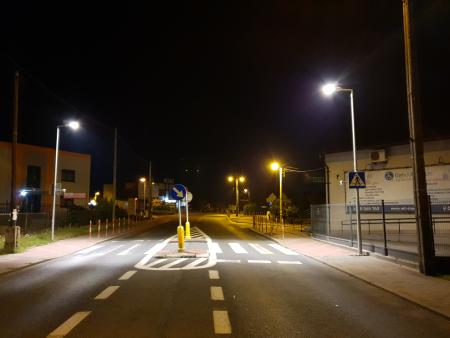
In 2018, an analysis of the causes of road crashes involving pedestrians in the voivodship Małopolskie in Poland found that 68% of such crashes occurred in the vicinity of pedestrian crossings. The Małopolska Voivodship Police Headquarters in Cracow undertook a detailed assessment of the illumination of and road markings at pedestrian crossings for the whole region. The study identified a large number of deficiencies, especially related to illumination. The official statistics confirmed the high risk for pedestrians on pedestrian crossings.
Friday, June 7, 2024
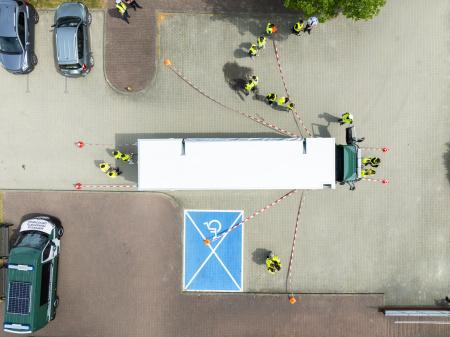
More than 6000 children up to the age of 14 died between 2011 and 2020 in road collisions in the European Union. In 2023 there were 1,778 road crashes involving children in Poland
aged 0-14: 48 children died and 1,832 were injured. About 45.7% of all road crashes victims in Poland are vulnerable
road traffic users. Many of them involve children in rural areas.
aged 0-14: 48 children died and 1,832 were injured. About 45.7% of all road crashes victims in Poland are vulnerable
road traffic users. Many of them involve children in rural areas.
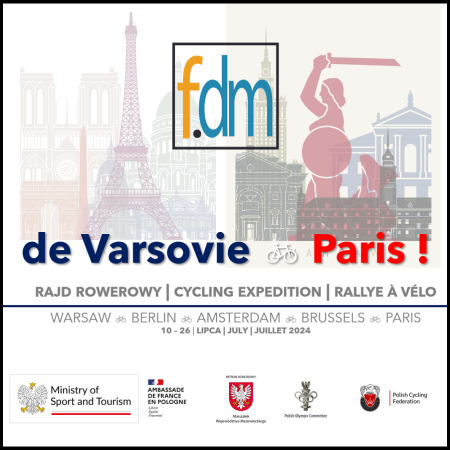
10 July 2024 09:00 – 26 July 2024 15:00
Poland, Germany, Holland, Belgium, France
Poland
Bicycle card for Mazovia. Pruszków.
We have completed one of the largest road safety educational projects. The project was dedicated to children aged 10+, at the beginning of the bicycle card course*, under the new guidelines of the Minister of Education. Project cost: 12,500 euros.
The longest celebration of the 7th UN Global Road Safety Week.
The last act of celebration of the 7th UN Global Road Safety Week has ended. Our project lasted 9 months, divided into 5 stages. First: children from school No. 285 painted pictures in a car showroom during winter break (February 2023). Second: creation of the Volvo Selekt Art Gallery during the UN Global Road Safety Week - buyers of used cars could buy one of the paintings. Third: a fund was created from the sale of paintings, we collected EUR 1,300. Fourth: we bought 4 bicycles, helmets and lighting to equip the "road safety room" at Primary School No. 285.