Greece

Annual Review 2025-2026: Road Safety Education Reached 4,742 Students Across the Dodecanese Islands

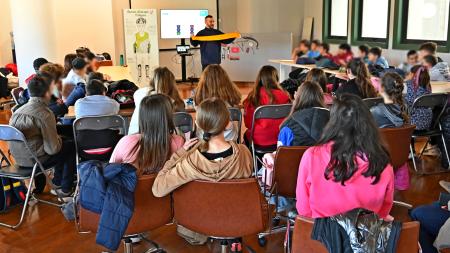
With the completion of the 2025-2026 school year, EFTHITA. Rhodes - Road Safety Observatory, proudly presents the results of another successful year of road safety education across the Dodecanese Islands.

For the 16th consecutive year, our Ministry of Education-approved educational programme "Safe Road Use -Safe Cycling" has promoted safe mobility among children and young people through interactive, evidence-based learning activities.

Tuesday, June 23, 2026
Road traffic crashes remain a major public health challenge, representing the leading cause of death among children and young people aged 5–29 worldwide. Greece is no exception to this reality, with vulnerable road users facing evolving mobility challenges, including the growing use of e-scooters and other personal mobility devices alongside traditional road safety risks, reinforcing the need for early, practical and age-appropriate road safety education.
At national level, this challenge is further compounded by the fact that road safety education is not compulsory within the school curriculum and is largely left to the discretion of teachers, who may choose whether to implement it through skills-based workshops. As a result, many children and young people have limited opportunities to develop the knowledge, skills and attitudes required to become safe and responsible road users through structured learning.
At regional level in Northern Greece, there was a clear need for an innovative and accessible educational initiative capable of bringing together the expertise of the road safety sector, local communities and the private sector in order to strengthen prevention efforts and engage different population groups within a shared road safety framework.
These interconnected challenges highlight a clear gap in structured, experiential and inclusive road safety education, which this initiative was designed to address.
Tuesday, June 23, 2026
Nea Odos operates one of Greece's most strategically important motorway corridors - the 196 km Ionia Odos (A5), part of the European E65 route At Nea Odos, road safety relies on a coordinated ecosystem of processes, systems, human and material resources. Our daily goal is to enhance operational capacity through innovation with measurable improvements in detection and response times, while setting a benchmark for the industry.
To support this goal, we deployed an AI-powered system for 24/7 maintenance, surveillance, and driver information, along the entire length of the Ionia Odos highway addressing critical motorway safety challenges such as animal incursions, pedestrian presence, vehicles moving against traffic etc These high-risk events require significant resources and are often linked to severe incidents.
Traditional monitoring systems rely on fixed infrastructure with limited coverage and adaptability. Furthermore, the growing number of data sources—sensors, navigation apps, crowd inputs, and weather data—often leads to fragmentation, operator overload, and inconsistent alerts. As a result, operators must cross-check multiple systems, delaying event validation, response, and communication.
To address these challenges, Nea Odos partnered with Valerann to integrate AI-powered cameras, geolocation and multi-source data analytics into a unified platform - Lanternn. Goal to improve detection speed and accuracy, reduces response times, and enable faster, targeted response.
By integrating diverse data Nea Odos is advancing safer, smarter motorway operations without costly infrastructure expansion.
Sunday, June 14, 2026
Road safety around schools remains a significant challenge in Rhodes, particularly during student arrival and departure times. Excessive vehicle speeds, unsafe pedestrian crossings, limited driver awareness, and risky behaviours by both road users and pedestrians increase the likelihood of road traffic incidents involving young people.

A key challenge identified through our work was the limited involvement of young people in road safety decision-making processes. Students are directly affected by unsafe road environments, yet they are rarely given opportunities to express concerns, identify local risks, or contribute to solutions. At the same time, many young people underestimate the importance of safe road behaviour or view road safety as solely the responsibility of adults and authorities.

Our initiative addressed these challenges by transforming students and university trainees from passive recipients of information into active participants in road safety improvement. Through education, observation, field research, community engagement and cooperation with local authorities, participants identified hazardous locations around their schools, proposed practical solutions, contributed to awareness actions and promoted safer mobility practices.

The project also addressed the need for stronger cooperation between schools, higher education institutions, civil society organisations and public authorities, creating a collaborative approach to improving road safety and fostering a culture of responsibility, participation and prevention among young people.
Thursday, June 11, 2026
Road authorities across Europe share a common problem: road safety budgets are limited, road networks are vast, and decisions on where to intervene are usually based on fragmented or purely historical accident counts. Authorities can see where accidents have already happened, but not where risk is growing. As a result, emerging accident hotspots are typically addressed only after harm has occurred, and resources are not always directed to the locations where they would prevent the most crashes, injuries and deaths.

To address this challenge, INLECOM developed an AI-based road accident risk prediction tool within the EU-funded EvoRoads project (Horizon Europe, GA No. 101147850). The tool turns the historical accident data that virtually every road authority already collects into actionable safety intelligence. It classifies every segment of a road network by two complementary dimensions: its current accident risk level, and its risk trajectory, whether accidents on that segment are increasing, stable or decreasing over time.

This dual view enables authorities to prioritize interventions, allocate budgets to the areas of greatest need, and act preventively on segments where risk is rising, before accidents happen rather than after. The tool was validated at full regional scale in Piedmont, Italy, with CSI Piemonte.
Friday, June 5, 2026
The programme of the Region of Eastern Macedonia and Thrace was designed to address a wide range of systemic and behavioral challenges identified at both the local and national levels. The main challenges addressed are the following:

Lack of Experiential Education and Dangerous Youth Behaviors: Traditional road safety education was often limited to strictly theoretical approaches. At the same time, a high tolerance for dangerous behaviors was recorded among young people, such as the non-use of seatbelts in rear seats, riding without a helmet, driving under the influence of alcohol or fatigue, and using a mobile phone while driving. We addressed this challenge by introducing permanent simulation equipment (intoxication simulation glasses, crash simulators) to achieve a practical, experiential change in the students' mindset.

Protection of Vulnerable Road Users (VRUs): The safe integration of pedestrians, young children, cyclists, and the elderly into the urban environment remains a constant challenge. This problem was tackled through micro-mobility education, the organization of traffic education parks for the issuance of a "Bicycle Driving License", as well as targeted actions tailored for the elderly.

Professional and Freight Transport Safety: The operation of heavy vehicles (trucks and buses) entails significant risks related to driver fatigue, cargo securing, and compliance with driving hours. This challenge was addressed by publishing specialized manuals for professional drivers and providing continuous training to the "Roadside Inspection Teams".

Ignorance of the Highway Code and Anti-social Driving: Phenomena such as illegal parking on disability (ADA) ramps and pedestrian crossings, along with an ignorance of new legal provisions, severely degrade road safety. This problem was approached through direct on-street actions, including the distribution of "warning tickets" and informational material to citizens.

Lack of Digital Data for Decision-Making: The absence of a centralized digital recording system for dangerous incidents, accidents, and road defects hinders targeted planning. This challenge is being addressed through the adoption of the "Pythios" system, which is capable of recording, mapping (via heatmaps), and analyzing data in order to guide and prioritize administrative interventions.

Geographical and Local Constraints: The lack of access to traffic education activities for remote areas constitutes a major inequality issue. The Region addressed this by organizing activities in remote schools in the Prefecture of Drama, in mountainous areas of the Prefecture of Xanthi, as well as conducting special educational interventions in island areas, such as Samothrace.

Volunteer Initiative Promoting Road Safety During Easter Travel

The volunteer team of EFTHIT.A. Rhodes - Road Safety Observatory, continuing its annual Easter initiative, prepared handmade Easter candles and distributed them free of charge to drivers on Holy Thursday in Rhodes. 

Through this symbolic action, we shared an important message: “Happy Easter to all. Drive responsibly, respect human life, and let us all work together for safe journeys with zero fatal road crashes.”

Along with the candles, we distributed:

• a leaflet with tips for safe travel

• an information leaflet on the new Road Traffic Code

Road Safety Education Initiative Reaches 2,116 Students in Rhodes and the Dodecanese

The educational team of EFTHITA – Road Safety Observatory of Rhodes continued its dynamic outreach during the period January – February – March 2026, carrying out awareness visits to schools across Rhodes and the Dodecanese.

Within the framework of the approved educational program “Travel Safely – Cycle Safely”, a total of 2,116 students and 180 teachers participated.

15 April 2026 08:00 – 17 April 2026 16:00
Zappeion Megaron & Travel
Greece
Friday, May 30, 2025
The core problem is that children in Greece grow up with little or no mobility education. There is no structured cultivation of what it means to be a responsible, aware participant in shared road environments. Most students have never experienced what it means to move safely, to share space, or to recognize the needs of vulnerable users (such as people with disabilities, pedestrians, or cyclists).
Our initiative targets children aged 0–16 and promotes safe and sustainable mobility through education in schools in the Municipality of Chania, Crete. We do not approach road safety simply as accident prevention — we view it as a cultural issue: How do we perceive movement in public space? How do we respect pedestrians, cyclists, and especially children?
Our programme fills this gap by offering an immersive, experience-based approach through Virtual Reality (VR) technology — placing children in realistic traffic situations where they learn by living the experience, not just reading about it.
The goal is not just to “prevent harm.” It is to help them move through the world with awareness, respect, and a sense of belonging in a community that moves together.
Subscribe to Greece