
Italy

23 June 2026 08:00 – 26 June 2026 16:00
University of Naples Frederico II
Italy


Monday, December 15, 2025
Night-time road safety represents one of the most critical challenges in Italy, particularly for young adults aged 18–35. National and local statistics show that the most severe road accidents occur during night-time hours and weekends, when alcohol consumption, fatigue and reduced visibility significantly increase risk. In urban areas such as Rome, these risks are amplified by the lack of frequent night public transport, especially after large events and festivals.
Young people returning from concerts, nightlife venues or university events often rely on private cars, increasing exposure to driving under the influence, distraction and speeding. Road crashes remain the leading cause of death among young people in Europe, and Italy continues to record a road mortality rate above the EU average.
Events and festivals represent peak-risk scenarios: thousands of people leave the same venue ensuring congestion, late-night driving and impaired decision-making. Despite this, traditional road safety policies rarely address mobility during events in a structured way.
CBH addresses this gap by focusing specifically on organised night-time transport during high-risk hours (typically between 11:00 PM and 5:00 AM), providing a safe, collective alternative to private car use. The initiative directly tackles behavioural risk factors by removing the need to drive after social events, targeting the exact context and time window where the probability of severe accidents is highest.
Young people returning from concerts, nightlife venues or university events often rely on private cars, increasing exposure to driving under the influence, distraction and speeding. Road crashes remain the leading cause of death among young people in Europe, and Italy continues to record a road mortality rate above the EU average.
Events and festivals represent peak-risk scenarios: thousands of people leave the same venue ensuring congestion, late-night driving and impaired decision-making. Despite this, traditional road safety policies rarely address mobility during events in a structured way.
CBH addresses this gap by focusing specifically on organised night-time transport during high-risk hours (typically between 11:00 PM and 5:00 AM), providing a safe, collective alternative to private car use. The initiative directly tackles behavioural risk factors by removing the need to drive after social events, targeting the exact context and time window where the probability of severe accidents is highest.

Thursday, May 29, 2025
Since the earliest days of the automobile, aquaplaning – when a vehicle loses grip due to a layer of water between the tires and the road – has remained one of the few critical safety challenges still unresolved by today’s technologies. It continues to cause thousands of fatalities annually, and it’s estimated that around 20% of road accidents occur in low-grip conditions, often linked to rain or standing water.
Despite decades of development in passive and active safety systems, no solution currently exists to restore grip once aquaplaning begins. This makes it a persistent threat for all drivers, and a major obstacle to the safe deployment of autonomous vehicles.
The Aquaplaning Intelligent Solution (AIS) by Easyrain addresses this safety gap by actively restoring tire-road contact in real time: the system sprays high-pressure water in front of the front tires to break the water layer causing aquaplaning. AIS is the first system designed specifically to prevent aquaplaning, offering a new layer of safety where existing technologies fall short. While its benefits are immediate for today’s road users, AIS also contributes to the essential safety required to enable autonomous driving in all weather conditions.
Despite decades of development in passive and active safety systems, no solution currently exists to restore grip once aquaplaning begins. This makes it a persistent threat for all drivers, and a major obstacle to the safe deployment of autonomous vehicles.
The Aquaplaning Intelligent Solution (AIS) by Easyrain addresses this safety gap by actively restoring tire-road contact in real time: the system sprays high-pressure water in front of the front tires to break the water layer causing aquaplaning. AIS is the first system designed specifically to prevent aquaplaning, offering a new layer of safety where existing technologies fall short. While its benefits are immediate for today’s road users, AIS also contributes to the essential safety required to enable autonomous driving in all weather conditions.
Wednesday, April 16, 2025
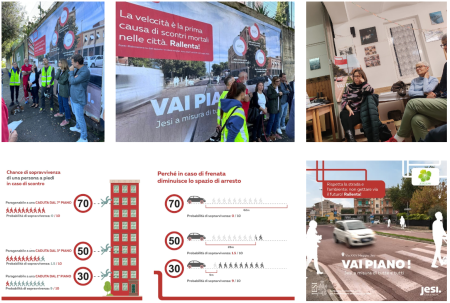
Una delle sfide principali riguarda una cultura radicata che privilegia l'uso dell'automobile, scoraggiando l'adozione di mezzi pubblici e di trasporti alternativi. Questo comportamento si riflette in un mancato rispetto delle normative del codice della strada. Inoltre, c'è una scarsa attenzione verso la protezione degli utenti più vulnerabili, come pedoni e ciclisti. Questo atteggiamento compromette la vivibilità della città, che viene vissuta più come un luogo di transito che come uno spazio di incontro e socializzazione.
Thursday, April 10, 2025
Road safety in Europe and worldwide is still tragically compromised by a high number of accidents and avoidable loss of human lives.
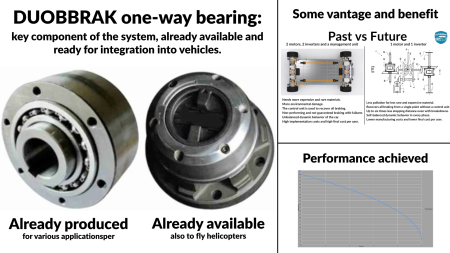
This is compounded by the worrying frequency of vehicle recalls for brake problems, with over 3 million units affected in just two years (ANSA data), a symptom of an intrinsic vulnerability in current systems.
The dependence on rare materials in traditional braking systems and new technologies not only creates economic instability but also generates significant geopolitical implications.
Furthermore, there remains a lack of a reliable and universal mechanical solution capable of improving braking and ensuring safety in the event of failure.
These challenges highlight the urgent need for innovative solutions like DUOBBRAK, capable of overcoming the limitations of current systems, despite the resistance, and mostly the indifference, encountered in promoting it within the industry, accelerators, and public and private institutions
This is compounded by the worrying frequency of vehicle recalls for brake problems, with over 3 million units affected in just two years (ANSA data), a symptom of an intrinsic vulnerability in current systems.
The dependence on rare materials in traditional braking systems and new technologies not only creates economic instability but also generates significant geopolitical implications.
Furthermore, there remains a lack of a reliable and universal mechanical solution capable of improving braking and ensuring safety in the event of failure.
These challenges highlight the urgent need for innovative solutions like DUOBBRAK, capable of overcoming the limitations of current systems, despite the resistance, and mostly the indifference, encountered in promoting it within the industry, accelerators, and public and private institutions

Thursday, April 10, 2025
Guardrails installed on road bridges are essential to the safety of vehicles and road users. May accidents happen every year, involving vehicles falling from bridges with often fatal consequences. These issues have caused, in Italy, in the last decade, more fatalities than bridge collapses, even if we count the Morandi bridge collapse victims.
Many infrastructure managers, especially at the local level, often lack accurate and up-to-date inventories of the safety barriers on their bridges. Moreover, the limited availability of financial resources, combined with the lack of personnel, makes it difficult for these entities to effectively assess the condition of such critical infrastructure. This proposed technology is represented by an integrated methodology to automate the assessment of road guardrails installed on bridges using open-source data and deep learning (DL) algorithms. It innovatively uses YOLO (You Only Look Once) object detection algorithm to classify the safety barriers to establish whether they match the current standards. To speed up the evaluation process, the software tool involves the extraction of bridge information from OpenStreetMap (OSM) to construct a database of existing bridges, which most road management bodies miss. This is integrated with Google Street View API, for the extraction of images of each bridge’s safety barriers to be analysed by YOLO. The synergic concatenation of these three steps (OSM, Google Street View, YOLO) into a unique software tool, provides road managers with a cost-effective and efficient tool to remotely survey the guardrails installed on their bridges, permitting to timely identify bridges needing barrier replacment.
Many infrastructure managers, especially at the local level, often lack accurate and up-to-date inventories of the safety barriers on their bridges. Moreover, the limited availability of financial resources, combined with the lack of personnel, makes it difficult for these entities to effectively assess the condition of such critical infrastructure. This proposed technology is represented by an integrated methodology to automate the assessment of road guardrails installed on bridges using open-source data and deep learning (DL) algorithms. It innovatively uses YOLO (You Only Look Once) object detection algorithm to classify the safety barriers to establish whether they match the current standards. To speed up the evaluation process, the software tool involves the extraction of bridge information from OpenStreetMap (OSM) to construct a database of existing bridges, which most road management bodies miss. This is integrated with Google Street View API, for the extraction of images of each bridge’s safety barriers to be analysed by YOLO. The synergic concatenation of these three steps (OSM, Google Street View, YOLO) into a unique software tool, provides road managers with a cost-effective and efficient tool to remotely survey the guardrails installed on their bridges, permitting to timely identify bridges needing barrier replacment.
Wednesday, April 9, 2025
The C•AUTO project addresses several persistent and emerging road safety challenges, particularly within urban environments. One of the main problems we focus on is excessive vehicle speed in sensitive areas such as school zones, hospitals, pedestrian crossings, and high-risk intersections. Despite existing signage and infrastructure, speeding remains a leading cause of accidents, particularly those involving vulnerable road users like children, the elderly, and cyclists.
Another key issue is the lack of adaptive and proactive tools to manage traffic behavior in real-time. Current solutions often react after incidents occur, rather than preventing them. C•AUTO proposes an innovative approach through the deployment of intelligent electric vehicles that function as mobile “City Safety Cars.” These vehicles travel at regulated speeds and use predictive data to position themselves strategically in urban areas with higher accident risk.
Furthermore, C•AUTO tackles the challenge of building a shared safety culture. It aims to influence driver behavior through presence, not punishment—creating an environment of passive regulation, education, and visual deterrence rather than relying solely on fines or enforcement.
By addressing both infrastructural gaps and behavioral aspects, C•AUTO contributes to achieving the Vision Zero goal of eliminating fatalities and serious injuries on our roads.
Another key issue is the lack of adaptive and proactive tools to manage traffic behavior in real-time. Current solutions often react after incidents occur, rather than preventing them. C•AUTO proposes an innovative approach through the deployment of intelligent electric vehicles that function as mobile “City Safety Cars.” These vehicles travel at regulated speeds and use predictive data to position themselves strategically in urban areas with higher accident risk.
Furthermore, C•AUTO tackles the challenge of building a shared safety culture. It aims to influence driver behavior through presence, not punishment—creating an environment of passive regulation, education, and visual deterrence rather than relying solely on fines or enforcement.
By addressing both infrastructural gaps and behavioral aspects, C•AUTO contributes to achieving the Vision Zero goal of eliminating fatalities and serious injuries on our roads.
Wednesday, April 2, 2025
According to statistics, road accidents are the leading cause of death for young people, especially in the 18-24 age group. This is a good reason to raise awareness and to leverage the young population.
Very young people and young adults represent an interesting target for awareness campaigns. Not only are they able to spread awareness in society right now, but they are also highly exposed to road risks. Moreover, when properly addressed, younger people are open to learn and to change behaviour.
Motorways, Italian Police and City Authorities decided to reach out to young people by devising a project aimed at road safety culture.
The main goal is to widespread safety culture directly to students and young adults. It is also the opportunity to mobilize on road safety a huge number of national, regional and local stakeholders.
Impact and scale 1: The core of the initiative are 40 events in 6 regions and 20 towns. Organizers expect to raise awareness to 10.000 to 20.000 people, ideally 15.000. It’s not an easy tour of lectures in schools. Not only events: strategies for medium/long term engagement are put into practice. A concrete assessment of results is being made.
Very young people and young adults represent an interesting target for awareness campaigns. Not only are they able to spread awareness in society right now, but they are also highly exposed to road risks. Moreover, when properly addressed, younger people are open to learn and to change behaviour.
Motorways, Italian Police and City Authorities decided to reach out to young people by devising a project aimed at road safety culture.
The main goal is to widespread safety culture directly to students and young adults. It is also the opportunity to mobilize on road safety a huge number of national, regional and local stakeholders.
Impact and scale 1: The core of the initiative are 40 events in 6 regions and 20 towns. Organizers expect to raise awareness to 10.000 to 20.000 people, ideally 15.000. It’s not an easy tour of lectures in schools. Not only events: strategies for medium/long term engagement are put into practice. A concrete assessment of results is being made.
21 November 2024 09:00 – 23 November 2024 17:00
Rimini Exhibition Center
Italy