
Belgium

Tuesday, March 17, 2026
Social media is deeply intertwined with the daily lives of young people and young adults in Belgium. The rise of platforms such as TikTok, Instagram and YouTube has led to a new dynamic in the dissemination of information and opinions. This study stems from the concern that social media can normalise and even glorify not only positive but also risky behaviour in traffic. The main objective of this study was to map the prevalence, nature and impact of such content and thus contribute to a better understanding of the role of social media in road safety.

Monday, June 30, 2025
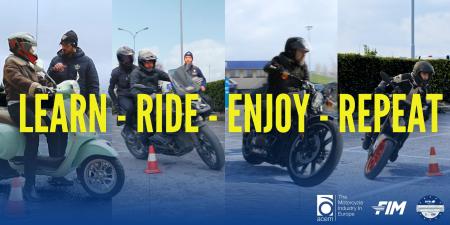
The human factor has repeatedly been shown to be the most critical factor in accidents involving riders. For this reason, lifelong training should be encouraged, reaching out to new and existing motorcyclists. High-quality training is instrumental in achieving the EU safety targets on the way to Vision Zero. To ensure that society fully benefits from all the advantages offered by motorcycles, more work is necessary to further improve the safety record of riders across Europe.

Friday, May 30, 2025
One of the key challenges in modern road safety is ensuring that driver assistance systems (ADAS) function reliably and accurately in real-world conditions. Among these, the Speed Limit Information Functions (SLIF), which display the current speed limit to the driver, are critical to encouraging compliant and safe driving behavior.
However, if these systems display incorrect or outdated speed information, drivers may unintentionally drive too fast or too slow for the road conditions, increasing the risk of collisions, fines, and public distrust in vehicle technology.
IVEX has developed an innovative platform that enables vehicle manufacturers and consumer testing organizations like Euro NCAP to objectively evaluate how well these systems perform on real roads, not just in simulations or controlled environments.
By enabling large-scale, real-world testing and providing quantifiable performance insights, IVEX helps:
- Manufacturers improve the reliability of their ADAS systems,
- Regulators and safety organizations set smarter standards,
- Consumers make informed decisions about the safety of their vehicles.
Ultimately, IVEX's solution contributes to:
- higher transparency,
- better engineering,
- fewer speed-related accidents.
Helping advancing Europe’s Vision Zero goals and making roads safer for everyone.
However, if these systems display incorrect or outdated speed information, drivers may unintentionally drive too fast or too slow for the road conditions, increasing the risk of collisions, fines, and public distrust in vehicle technology.
IVEX has developed an innovative platform that enables vehicle manufacturers and consumer testing organizations like Euro NCAP to objectively evaluate how well these systems perform on real roads, not just in simulations or controlled environments.
By enabling large-scale, real-world testing and providing quantifiable performance insights, IVEX helps:
- Manufacturers improve the reliability of their ADAS systems,
- Regulators and safety organizations set smarter standards,
- Consumers make informed decisions about the safety of their vehicles.
Ultimately, IVEX's solution contributes to:
- higher transparency,
- better engineering,
- fewer speed-related accidents.
Helping advancing Europe’s Vision Zero goals and making roads safer for everyone.

Friday, May 30, 2025
Cycling to work is sustainable, accessible, inclusive, low-cost, and healthy.
A mental shift – changing attitudes, perceptions, and habits – is essential before a modal shift can occur, because employees must first believe in the safety, practicality, and benefits of cycling before they are willing to change their daily transport choices.
We focus on the risks associated with cycling to work. Many employees lack the safety awareness and practical skills to navigate these challenges.
We identify three core road safety problems:
1. Distraction while cycling: using smartphones, GPS devices, or headphones significantly impairs attention and reaction time.
2. Inappropriate speed, particularly on electric bicycles: the higher speeds of e-bikes require better anticipation and control, yet many cyclists are unaware of the dangers this poses in mixed traffic.
3. Cycling under the influence: alcohol or drug use, even in small amounts, dramatically reduces a cyclist’s coordination and judgment.
These challenges are compounded by a lack of targeted, practical training for adult commuters. Our project uses immersive virtual reality simulations to allow employees to experience these risks in a controlled environment, raising awareness, changing perceptions, and promoting safer cycling behavior. The ultimate goal is achieving a mental and modal shift toward safer, more sustainable mobility choices.
A mental shift – changing attitudes, perceptions, and habits – is essential before a modal shift can occur, because employees must first believe in the safety, practicality, and benefits of cycling before they are willing to change their daily transport choices.
We focus on the risks associated with cycling to work. Many employees lack the safety awareness and practical skills to navigate these challenges.
We identify three core road safety problems:
1. Distraction while cycling: using smartphones, GPS devices, or headphones significantly impairs attention and reaction time.
2. Inappropriate speed, particularly on electric bicycles: the higher speeds of e-bikes require better anticipation and control, yet many cyclists are unaware of the dangers this poses in mixed traffic.
3. Cycling under the influence: alcohol or drug use, even in small amounts, dramatically reduces a cyclist’s coordination and judgment.
These challenges are compounded by a lack of targeted, practical training for adult commuters. Our project uses immersive virtual reality simulations to allow employees to experience these risks in a controlled environment, raising awareness, changing perceptions, and promoting safer cycling behavior. The ultimate goal is achieving a mental and modal shift toward safer, more sustainable mobility choices.
Thursday, May 29, 2025
Children and young people (till 25 years old) make up 41% of the world’s population (United Nations, 2024) and about 25% of this age group is represented in the EU population (Eurostat, 2024). They are an active group, often dependent on public space for movement and social interaction. Yet, that public space is not designed with them in mind, nor does it reflect their world and needs. This has consequences. Every day in Flanders, an average of 10 students (aged 3 to 18) are involved in traffic crashes on their way to school (VIAS Institute, 2019–2023). Over 60% of those victims were walking or cycling. In Europe there were still 455 fatalities amongst children and 2 388 fatalities amongst youth which shows that mobility is not yet inclusive, safe and of high quality for all.
Poorly adapted public space brings dangers and challenges, but it also has more subtle barriers. Children and young people are becoming increasingly less physically active. Regular movement is however essential for both their physical and mental health. One way to encourage this movement is by promoting walking and cycling from an early stage and at a young age.
Inadequate public space also negatively affects the independence of children and young people. About a quarter of students in Flanders are driven by car even for short trips between home and school. That’s unfortunate, because travelling independently helps children learn how to navigate their environment, assess risks, and interact with other road users. This builds confidence and equips them with the skills—and the right—to travel alone.
Poorly adapted public space brings dangers and challenges, but it also has more subtle barriers. Children and young people are becoming increasingly less physically active. Regular movement is however essential for both their physical and mental health. One way to encourage this movement is by promoting walking and cycling from an early stage and at a young age.
Inadequate public space also negatively affects the independence of children and young people. About a quarter of students in Flanders are driven by car even for short trips between home and school. That’s unfortunate, because travelling independently helps children learn how to navigate their environment, assess risks, and interact with other road users. This builds confidence and equips them with the skills—and the right—to travel alone.

Friday, May 16, 2025
More and more trucks on our roads means that the potential for dangerous incidents involving trucks is on the rise. Society’s demand for delivered goods has continued to increase. The net effect is a prediction that global freight demand will treble between 2015 and 2050 (ITF, 2019). Heavy trucks are likely to become more and not less important. Currently, heavy trucks comprise only 1.5% of vehicles on Europe's roads, yet they are responsible for almost 15% of all EU road fatalities. Vision Zero cannot be reached without tackling the challenges presented by trucks on our roads. Euro NCAP believes that fleet managers have the greatest opportunity to make changes on the road and to the safety of their fleets because usually their procurement orders are significant.
Euro NCAP’s new Safer Truck programme looks at a heavy vehicle’s ability to prevent, react, and deal with a possible accident, for example, considering the fitment of technologies for occupant monitoring and safety assistance, as well as good vision. Euro NCAP considers diverse types of scenarios in a collision: frontal, lane departure, and low-speed manoeuvring. Euro NCAP also wants to convince businesses of the economic viability of delivering safety to their fleets, which will lower the number of truck accidents whilst lowering the loss and costs for businesses.
Euro NCAP’s new Safer Truck programme looks at a heavy vehicle’s ability to prevent, react, and deal with a possible accident, for example, considering the fitment of technologies for occupant monitoring and safety assistance, as well as good vision. Euro NCAP considers diverse types of scenarios in a collision: frontal, lane departure, and low-speed manoeuvring. Euro NCAP also wants to convince businesses of the economic viability of delivering safety to their fleets, which will lower the number of truck accidents whilst lowering the loss and costs for businesses.
Friday, May 9, 2025
In the Maritime Neighbourhoud of Molenbeek, we identified multiple road safety barriers that disproportionately affect children and women. Many vulnerable residents, especially children, do not have access to a bike or a safe space to ride, making it difficult to learn and practice cycling. Public space is often dominated by car traffic, and children are rarely given the opportunity to move independently and safely. Additionally, many women never learned to ride a bicycle or have lost confidence due to long-term disuse and fears around traffic. A lack of infrastructure, awareness, and cycling culture further limits active mobility. Through Openstreets, we tackled these challenges by creating car-free zones, offering safe spaces for learning, practicing, and enjoying cycling. We provided access to bikes, organized lessons for women and children, and ensured on-site bike repair services. This comprehensive approach helped remove practical, cultural, and emotional barriers to cycling. In doing so, we promoted cycling as a safe, accessible, and empowering mode of transport and helped shift perceptions of who “belongs” on the road.

Tuesday, May 6, 2025
Alcohol-related accidents are one of the most preventable yet persistent causes of road fatalities. In Europe, they represent a significant share of traffic deaths, especially in nightlife settings such as bars, clubs, festivals, and sports events. These are environments where individuals often underestimate their level of intoxication and decide to drive without assessing their fitness. Most of these venues lack accessible and non-stigmatizing tools to help individuals evaluate their condition before driving. Traditional campaigns are costly and not scalable, leaving a gap in continuous on-site prevention. Fline addresses this challenge with the FlineBox, an interactive, self-service breathalyzer designed for high-risk environments. It enables real-time testing, encourages behavioral change, and collects anonymized data to support targeted public safety strategies. This initiative offers a scalable and sustainable solution to bridge the gap between awareness and action, directly reducing risk where it occurs.
Friday, May 2, 2025
Veilig Over is een initiatief dat ernaar streeft voetgangers veilig te laten oversteken en dat bovendien iedereen toestaat om ook zélf aan te duiden waar er nood is aan een veilige oversteekplaats, via een onlineplatform veiligover.be. Samen oversteken veilig maken, dat is de ambitie van ‘Veilig Over’. Dit doen we met een unieke samenwerking met lokale en regionale overheden & burgerparticipatie en citizen sciene & wetenschappelijke evaluatie (met Vias institute). Dit alles met als resultaat: de concrete verwezenlijking van een veilige oversteekplaats op het terrein!